7.11.2006

Nara: Revisited

The first stop that Chuck and I made on our sightseeing tour was Nara, the old capital of Japan. Back in the days of yore, capitals moved with every new emperor. Starting around the 700 CE, Japanese emperors basically said, "I'm tired of all this moving around! Let's just pick a new spot and stay there!" So they did. For at least 100 years. Then they moved to Kyoto. For almost a thousand years.

What really made the day for Chuck and I was the volunteer tour guide who led us around the city. She was a university student who wanted an opportunity to speak English with native speakers.
Being a tour guide is a great way to do that: you rehearse some set phrases for each city landmark and you also speak spontaneously about predictable and unpredictable topics in English. As a language teacher, I can see how it reinforces old vocabulary, introduces new vocabulary and accents, and broadens one's knowledge about their own and their guests' cultures.

I came to Nara last November and saw the same sites. Without a guide, they're just impressive structures. With a guide, they come alive and grow richer with the historical and anecdotal context. It is a luxury to have instant access to a cultural informant who can explain everyday things that baffle the visitor to Japan. I don't get this opportunity often, so you can imagine how many questions I had for our guide!

We ended up strolling around Nara for about 4 hours. June is the rainiest month in Japan. My Japanese co-workers and expat neighbors would have me believe that it rains for the entire month and nothing ever gets dry. So when we've had sunny days, I've been confused. The truth is, it is statistically the wettest month, it doesn't mean that someone turns the "rain" switch on June 1st and off June 30th. So on this day, Chuck and I escaped most of the rain. We had a strong downpour when we were inside the largest wooden building in the world: Todaiji Temple (2/3 of its original size. Tall wood things don't last long without lightning rods!).

Chuck was fascinated with all the deer roaming freely through the center of town. According to Shinto beliefs, they are spiritual messengers and therefore cannot be hunted. Apparently one of them had a message for Chuck. He was really surprised to hear it! Many vendors sell deer biscuits to feed them. The deer catch on to this and smell you up to see if your "packing" any. Could that be the message they are trying to send? We may never know.

On our way back from Nara, we stopped in a little restaurant for some tasty Okonomiyaki. I call it a "savory pancake" because it looks like a pancake but consists of egg-flour batter with seafood and/or vegetables mixed with strong sauces. This picture is of Hiroshima-style Okonomiyaki, with the ingredients layered on. Kansai-style has the ingredients mixed together. Obviously Kansai-style is better;) Chuck wanted "see-food" that night, reminiscent of the popular Benihana's restaurants in the USA where the chef does a lot of fanfare with the food preparation to entertain the guests sitting around the table. I haven't seen one of those here. They probably exist, but I just haven't had the large group of people to go with or the money burning a hole in my pocket to patronize the establishment. So at this restaurant, the cooks prepare the food in front of you, but you have to slip them a 10,000 yen note to get any hoopla out of them! Anyway, we crammed into the tiny restaurant and waited a good 20 minutes, but it was worth it. Chuck gobbled his dish up before me, and with chopsticks at that!

Nara was the first of 3 straight day trips to the cultural treasures of Kansai. Next entry: Eastern Temples of Kyoto!

6.29.2006

Issogashi

Sorry I missed my weekly posting time. Things have been really busy in school and out of it. My best friend from 1st grade is visiting me for the week, so I've been working ahead to have some free time with him.

Even though Japan and USA are out of the World Cup (and few people are staying up late to watch teams that don't represent their country), students and teachers are still tired. Maybe just end of school blues? That's when I try to kick it into the next gear.

Chuck and I will visit the rich cultural sites of Kyoto, Nara, and Himeji, as well as the techo-urban side of Osaka, in the next week. Please look for more frequent updates and pictures of our adventures! Genki de!

6.19.2006

Teaching a taste of French in Japanese


Today I had a personal encounter with the people who are responsible for making such delicious French pastries all over Japan. First let me back up and set the mood that I was in when I made the encounter.

I taught swimming lessons to two boys who will be going on the 2nd year students' trip to a wilderness island in the Inland Sea of Japan. The PE teachers needed extra help, so they called in "the ringer": me. I don't know about that, but I've offered my swimming expertise on previous occaisions, so I'm happy to help. It's something familiar to me. The boys are also my students in class, so they were comfortable with my voice and use of English. Swimming is a physical skill, so it is easy to mimic and one doesn't need to speak the language of instruction fluently to get the point across. I went over the basics until I found their weak points, then taught to those. After an hour, we got out and changed. There are few better feelings than air-drying off on the pool deck during a 90ºF (32ºC) day. Riding this natural high, I set off for the mall. Where else?;)

I had to buy some books for my English class at the book store. After that, I took a moment to read my free reading book on the deli/restaurant floor of the mall. I bought a milk tea and sandwiche au jambon. Eating the factory sliced bread day in and out sure does numb the memory of what freshly baked bread tastes like. The sandwiche was delicious. As I read, I could hear two girls attempting to count to twenty in French. "I wonder what that's about" I asked myself.

Then I remembered what my friend Nathan told me when I visited him in Mie-ken. Well-off Japanese parents send their children to Paris to learn the secrets of pastry baking. They bring their skills back to Japan and open their own patisserie. Maybe that's what thhttp://www.blogger.com/img/gl.link.gifeir up to.

On my way out, I asked them in Japanese if they were practicing French. They eagerly told me to sit down and invited me to pronounce some words for them. Their exercises consisted of food vocabulary, recipe instructions, and measurements. Yep, these women are going to Paris. They were amazed at the difficult phonemes such as the trilled and swallowed "r" and the vowel clusters that has one's tongue doing pilates to pronounce half a word.

Halfway through my lesson I admitted that I was an American, not French, and the women were even more surprised. At that point I realized that I had arrived as a multi-lingual: I was teaching my third language using my sixth language. Even using Japanese grammatical terms to explain French grammar. Phew! Maybe I wasn't too clear on somethings, but they seemed like they were less confused than when we began. After half an hour, I excused myself to go home, but not before I gave them my contact information if they had anymore questions.

What I should have done was to request a free pastry upon their return from France for my services rendered!

To me, French patisseries in Japan are a reflection of the Japanese value for experiencing and emulating the best with attention to detail. But don't think this is being done while they abandon their own cuisine. Japanese sweets and culinary treats abound here. I just can't find their chefs as easily as hearing French in the cafeteria! Genki de!

6.16.2006

Bob Marley: soccer player


I subscribe to a daily posting of blog entries from the Caribbean. It helps me to keep in touch with my "roots" in Jamaica. Being that I now live in Japan and am in the best position to write a bridge blog for English readers interested in Japanese culture, I normally don't comment on links to other regions. But considering that it's World Cup time, I thought you would enjoy this blog entry from author Geoffrey Philip about playing soccer with Bob Marley.

Geoffrey is from the generation in Jamaica that came of age before the high crime rate and socialist flirtations gave genesis to the '80s brain drain. During that time, one could have these casual encounters with world famous people and it wouldn't be a big deal. After all, it's an island and eventually you're going to run into the same people again and again. To some degree, you still can have encounters with famous people, but there's a lot more security to get through. I high-fived Beenie Man at a soccer game; met the Ted Kennedy of Jamaican politics, Edward Seaga, while wearing the political colors of his opposition; chatted with Sean Paul's cousin; and sat next to the members of Black Uhuru on the plane. There's no cult of celebrity in Jamaica that keeps famous people from interacting with the public like a regular person. So that's why this blog on playing soccer with Bob Marley is so unique. Enjoy!

6.14.2006

Keep the customers satisfied

I know it's been a while since my last entry and you're dying to see improved quality in the videos. As you all know, it's World Cup time. I've been balancing school preparation with bouts of world cup fever. It's not as bad as Olympic fever, but the symptoms from a loss are more severe. Japan and USA lost on the same day, so we weren't a happy bunch in the faculty room. Some students confided in me that they'd stayed up late or gotten up early to watch the match. There's a pack of little zombies going around school from lack of sleep. Why couldn't Germany schedule some 6 AM matches for the viewing pleasure of their Japanese fans? Or the other way around: why can't Japanese TV just show tape delayed matches during prime time? The slots are wide open during the midnight hours, so it works out better that way.

I had a cute encounter with children hunting otamajakushi yesterday. That's Japanese for tadpole. Language encounters and learning are easier when done in the presence of children: less pressure, simpler language, laughter and forgiveness of errors. 

Now that I'm in my last few months here, the langauge encounters with everyday Japanese that I meet on the street are increasing. And so is my language ability. A coincidence? Cause and effect? Sounds like a good research project. If only I had the time! Genki de and kyotsukute!

6.03.2006

Video on a Train to Yokkaichi


I'm experimenting with posting videos on my blog. This one is from my recent train trip to Mie Prefecture. It's from my digital camera, not my video camera, so the quality isn't that good. Stay tuned for better quality and subjects of video. Genki de!

6.02.2006

Japanese Train Nerd


It looks like my train travels documented in my previous email pale in comparison to this otaku. He has visited over 9,000 train stations in Japan. You can't do that without avoiding friends and work! Check it out!

5.31.2006

Train Fares in Japan

May has been a big month for my blog. I've posted 6 entries, with many pictures. Thanks to Site Meter, I know that 356 different people have visited A Brave New Word. They live in 11 countries! USA, Canada, Japan, Jamaica, Ukraine, Romania, Turkey, Belgium, Thailand, Taiwan, Bolivia, and Poland. I know people in the first 7 (except Canada) so the rest are people just surfing the web and finding me. Cool! Few of them show up in my Frappr map because they didn't choose to put a tag on it. Now how can I get visitors from Africa and Australia to round out my continental coverage?

Over the weekend I went to Nara, the old old capital of Japan, from 710 to 784 ce, for a professional association meeting. My friend Nathan lives on the other side of the mountain range from Nara, in Mie prefecture. He'd borrowed some camping supplies a few weeks ago and will be leaving for good next week. So I offered to "stop by" and pick them up since I was relatively in the area.

The train systems here track where you enter and leave the stations, by velocity instead of distance. So I arranged to meet Nathan in the station for the drop off and then head immediately back to Osaka. I would only be charged the fare from Nara to Osaka instead of Nara to Yokkaichi to Osaka. There's probably an ethical dilemma to this. I see it this way: if the train is of value to me based on where it takes me from and to, then I should be charged based on where I get in and out. You could live in the train system if you wanted to, but no one does. One has to come out sometime and the computer doesn't care where they've been in the meantime.

I still ended up paying more fare because I bought reserved seats on the limited express train. That made the Nara-Yokkaichi journey just about 100 minutes. If I took the rapid express trains, I would have had a much later night than I already did. I arrived home from the whole affair at 11 pm.

Feel free to lend your voice to the train fare ethics debate!

In other news, I'm giving a talk at the Junior High Chapel tomorrow. Entirely in Japanese. Thanks to a fellow teacher who translated my whole speech. I'll record it on MD (mini disc) and try to upload it to my blog. That could be my podcasting debut! Until then, genki de!

5.23.2006

A Whirlwind Tour of Tokyo

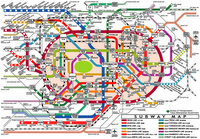
It seems to me that Japan is nothing if not efficient. How many other places can you be in the downtown of one city at noon and then be in the downtown of another city 340 miles away by 2:30 pm? That is the beauty of the bullet train (shinkansen in Japanese). I took the fastest one available from Osaka to Tokyo right after I taught my morning class at KGJH. There was an alumni meeting for MIIS graduates in Tokyo that I really wanted to attend. Sure it would be an expensive weekend, but how can you put a price on friendships rekindled and a new experience and perspective? This trip was at the end of a very long week of test design for midterms, so I didn't get to give this weekend all of the planning it deserved. I'm not sure it would have done me much good. Take a look at the subway map of Tokyo, and you'll understand why. I budgeted 2 hours for myself to get my bearings, check into my capsule hotel (more on that later), and get to the party. It ended up taking me 3.5 hours. I didn't factor in the labyrinthian underground passageways that allow no one to get their bearings with cardinal directions or landmarks, just signs, of which there are never enough in English. Still, there are a lot in English and I'm grateful for the Metropolitan government to give me that.
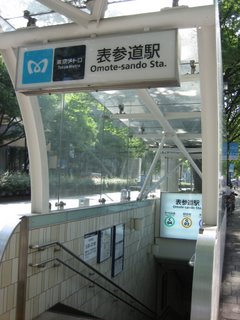
It was a hot day and I wore my suit on the train because the dress code for the alumni meeting was "business attire". I've overpacked because I threw stuff together after class and didn't get to weed out the unneeded stuff like I usually do. I've double backed through subway stations, bought the ticket to the wrong subway line, and now I'm looking for a capsule hotel that's 5 floors up. I walk the streets of Shinjuku, passing girls dressed up as baby dolls, Goths, super tan barbie dolls, and men dressed in hip-hop gear like they live south of 8 Mile (but actually in their parents' condo). Quite the swinging urban scene.
I finally made it to the capsule hotel and began the second phase of my overwhelmtion in Tokyo. If you're totally new to the concept, check out this guy's blog entry on them. My hotel said no photos or you're out, so I played it safe. Too safe, but for the first time, just scout and take risks later. My impression of the capsule hotel was that it has all the amenities of a regular hotel room, but they're all spread out communally over several floors. Bed - 3rd floor, closet (locker) - 4th floor, bathroom - 6th floor, restaurant - 5th floor. The Green Plaza capsule hotel also ran a sauna, so they included admission to it in the price of the lodging.

I made it an hour late to the alumni party, but the hour that remained was enough to touch base with the other TESOL grads there and set up an after party with some other folks from the different programs. Half were Japanese, half were something else (mostly Americans). We got a private room in the basement of a bar, had a few drinks (I was the designated subway rider, so I had tea) and of course, exchanged business cards.

Sunday morning I checked out of the capsule hotel. I didn't get much sleep because I was 2 feet away from 6 snoring men while I could hear someone heaving up his yakitori in the bathroom, another one flatulating away his curry udon into the still air of the sleeping quarters, and I was lying on 1 inch of mattress between a plastic floor to my capsule. Still, it was a unique experience so now I can say, "been there, done that, probably won't do it again unless for kicks and whinneys". I didn't have a place to stay in mind for Sunday night, but I was hatching a plan to take an overnight bus back to Osaka based on the return of my prospects for meeting up with friends I had contacted prior to my trip.
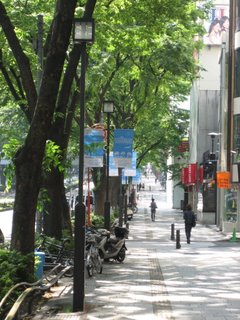
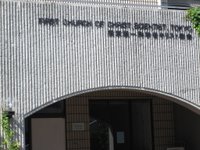
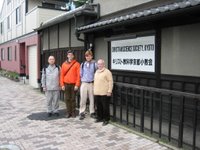
I went to the Christian Science church in Harajuku. It is off a beautiful street lined with big shade trees and wide brick-paved sidewalks. I was warmly welcomed by the ushers and sat down for a nice respite before the service. The readers read the scriptural selection and benediction in English for the handful of English-speakers in the congregation. The architecture inside the Tokyo church is what I would call typical of churches of Christ, Scientist with two walls behind the readers bearing quotations from the Bible and Mary Baker Eddy, organ, pews, and vaulted ceiling. In contrast, our Kyoto society was formerly a Japanese home, so we have stained virgin wood beams, a small garden, and paper walls separating rooms. Even Christian Science institutions reflect Japan's new & old living side by side! There was a membership meeting after the service where a young new member was going to be welcomed, so I didn't linger too long to speak with many of the members. Instead, I headed off for a "nationally famous" ramen shop in search of the most delicious bowl of noodles and pork cuts. In a total coincidence, I ran into one of my classmates from MIIS as she ascended the subway steps and I descended. In a city of 11 million where both of us were in town for less than 48 hours, what are the odds of that? She was with two other friends and let me tag along with them as they searched for an art bookstore.
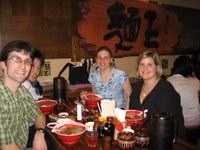
Then I enticed them to join me for ramen. The restaurant was touted by Lonely Planet as having usual lines out the door, but our word on the street was that is was "ma-ma" so-so. I held the jury for my own judgment. I was picturing some hole-in-the-wall that just relies on the recipe to draw its customers like some tucked-away Southern US BBQ joint. Ippudo apparently has chained off into a number of branches, so maybe that has dispersed the crowds. I ordered the lunch set with rice, gyoza (pot stickers), and extra pork cuts - what Suzanne would call "the carbohydrates lunch". My fetish with ramen noodles dates back to September 2003 when I saw the movie Tampopo in my language teaching methods class. So when the pork cuts melted in my mouth at my first bite, I knew that I had found a very special place. The others had their favorite in Nagoya, so I guess I'll have to try it before I leave!
My final sightseeing stop was the Edo-Tokyo Museum which chronicles the history of the city while providing a lot of hands-on opportunities to experience life for Tokyo residents of yore. You can pedal a rickshaw, walk through a era-specific home, bear a fireman's standard, and balance weighted water jugs on your shoulder. I give it two thumbs up!

Finally, I met some of my friends from Kanda University of International Studies (KUIS) who visited MIIS on a study abroad last March. We went to an izakaya (bar) eight stories above the Tokyo train station. What an incredible view. We had a private room for the five of us where we ordered plate after plate of finger food and glasses of alcohol to chase it down (I was designated bus rider so I had ginger ale). This was a very special evening for a number of reasons. I have felt quite lonely in Nishinomiya for lack of Japanese peers who I can talk to. Here I could talk about some very personal things with them. At first I was watching my words and sentence construction so as not to say anything that was over their heads. Then Yoko said that I didn't have to do that because they've been to the USA and could handle the authentic speech. I felt bad for low-balling their English ability because I knew what a remarkable teacher they had at KUFS. And finally that we could have our own space to talk instead of competing against the volume of other restaurant patrons. It made our group interaction feel just a bit more special.

9:30 pm came and I knew that the night busses to Osaka started to leave around 10. We paid our bill (20k yen split evenly between 5 of us came to $35, expensive but worth it for the relationship building) and dashed across the street to get me on a bus. Two of my friends paid to come inside the train station to help me get my bag out of the coin locker while the other two went to find the bus depot. Then we all regrouped to find and purchase a ticket for the best bus to get me back to Kansai. I am constantly impressed by moments of unselfish teamwork like this from my Japanese friends. We walked out to the loading bus and said our goodbyes. There was an awkward moment when they stood there looking at me. I was waiting for typical bow and they were waiting for a typical American hug! Never the shy one, Yoko asked for one and then we all exchanged hugs. It is not typical to express such public affection, but things are changing in Japan, and these abroad-traveled students are on the vanguard in some ways.

I had a slow 9-hour ride to Osaka to reflect on the special moments that Tokyo gave me this weekend. I think it has been a turning point in my time here. On my first day back to Nishinomiya I had an extended conversation in Japanese with a past-student and another one with a woman on the street who was walking her dog. Most times I am left alone, but perhaps my trip to Tokyo to build relationships with Japanese friends has made me more approachable to other Japanese. Just a theory.

5.16.2006

The Politics of English

Recently I learned a lesson to stay out of political discussions and just learn more about my own profession which has plenty of facets that I can spend my time investigating. But when politics comes to my profession, I suppose I can add my two cents to the conversation.

Tonight, President Bush gave his first oval address on a topic besides the war on terror or Iraq. It was on immigration. This is something to which my profession as an English teacher is inextricably linked. When the President speaks for over a paragraph about the English language, the professionals who teach it should take notice. That is an indication of many people behind the scenes in policy think tanks and organizations who are working to make it happen. Here is what the President said in his speech on Monday night in the USA:

Fifth, we must honor the great American tradition of the melting pot, which has made us one nation out of many peoples. The success of our country depends upon helping newcomers assimilate into our society, and embrace our common identity as Americans. Americans are bound together by our shared ideals, an appreciation of our history, respect for the flag we fly, and an ability to speak and write the English language. English is also the key to unlocking the opportunity of America. English allows newcomers to go from picking crops to opening a grocery, from cleaning offices to running offices, from a life of low-paying jobs to a diploma, a career, and a home of their own. When immigrants assimilate and advance in our society, they realize their dreams, they renew our spirit, and they add to the unity of America.

Keywords and phrases in this paragraph are: melting pot, assimilate, advance, opportunity. To me, it seems like what the President is saying is that English is the language of power and anyone who wants access to that power must learn it. I know there are people in the USA who want to assimilate into what they see as America and there are others who are there to take advantage of an opportunity that doesn't require English fluency and then hopefully go back to their own country without assimilating. And there are those who want both: to gain citizenship, maintain their own language and culture, and stay in the USA. Can we include these kind of people in the label "American"?

I think we already do. The Amish of the Midwestern States maintain their own language and culture with varying degrees of contact with mainstream Americans. What about people who trace their ancestry to the Spanish settlers of Florida, and the states considered to be the Southwest? Are they entitled to their language as part of their identity? True, the USA annexed these areas from Spain and settled them with its own citizens. But the culture still remains. Great Britain received New France in the 1760s. This would later become Canada with its French-speaking province of Quebec. Canada has two official languages, English and French. Can we recognize both languages and have unity as a nation? Canada has 7.1 million people who speak French at home (24% of total population in 2001). The USA has 28.1 million people who speak Spanish at home (10% of total population in 2000), yet no official language. Is it about the number of people or the percent? Why does the USA drag its feet on declaring one or more official languages? It could be a matter of resisting enforcement of something that is sufficiently being pandered by other social forces to keep English as the de facto language of power and the others at bay. One of those forces, to me, is the concept of the USA as a "melting pot".

The idea of "melting pot" to me is about homogenizing. The term was coined in 1908 by a playwright whose play featured a Jewish man falling in love with the daughter of an anti-Semitic Russian. They could overcome their differences thanks to the melting pot. The term persists to this day, but the diversity of our country has grown beyond the Europeans who came in the early part of the 1900s. When immigration was reformed in the 1960s, many more people from every other continent could come to the USA. The question now is: with so much more diversity of people and beliefs in the USA, does the melting pot metaphor still embrace what it means to be American?

The funny thing is, that Mexicans, Argentinean, Venezuelans, and other New World citizens will argue that they're American, too! The USA hasn't cornered the market on the term because we've got two continents named for America.

I'm concerned about what President Bush means by, "English is the key to unlocking the opportunity of America." There are some who want to make English the official language of the USA and therefore exclude any government effort to translate official documents into other languages. In essence saying, "Hah! Now you have to learn English because there's no other way to access information and therefore power." I'm an Applied Linguist who knows that children who are literate in their home language go on to become more proficient users of a second language. I know that language is identity. I know that first generation immigrants have diverse capacities and motivations for learning a second language. I know that the children and grandchildren of those first immigrants have different attitudes and capacities. So to insist on English literacy for every first generation citizen of the USA isn't respecting the diversity of what eventually makes us American through a process that takes place over many generations.

So my position as an English teacher is not to be an agent of American assimilation towards immigrants. My position is to motivate my students to learn English while respecting each one's language learning history. Language is power, there is no getting around that. The question is: are we comfortable sharing that power with other language speakers and still be able to identify ourselves as (United States of) Americans?

5.10.2006

Reflections on my World Perspectives major in College

I received an email from my alma mater, Principia College, asking me how my World Perspectives major affected me. A lot of what I wrote is good background for why I am a language teacher today and why I am presently in Japan. I'm posting my comments here in case you're interested.

So, how has being a Global Perspectives major affected...


you?


Skills that I developed as a result of the required courses for World Perspectives:

* I am a more conscious global citizen because of the weekly geography exercises and tests that we did in world focus seminar (W Pers 270).
* I am a savvy reader of the CS Monitor from the 10 international articles a week that I read for 5 quarters for world focus seminar.
* I never take a book's message at face value, but I research the background of the author, the bias of his/her perspective on the subject, and all contextual information about the book before making a conclusion. This skill was developed from reading a multi-100 page book a week and writing a paper on it for Worldography (W Pers 431).
* Accessing primary source material from sources around the world to write my capstone project (W Pers 401).
* Synthesizing information from different disciplines to capture a more global perspective [now I see why there's the name change!] of an issue

How it affected me as a person? That's a little bit harder to say 7 years out of graduation. But I've been a lot of places since then, so I guess you could say that World/Global Perspectives launched my international career.

the way you see the world?

It expanded my thought beyond the cliffs of Principia, beyond national borders, to investigate strands of humanity that unite us. I am capable of evaluating the information sources that I am pummeled with everyday to form my own conclusion. I can listen to conservative AM talk radio and watch Fahrenheit 9/11 in the same day and feel more informed for having explored two perspectives instead of seeing any source (besides God) as all-knowing and absolute truth!


I see a lot of value in cross-cultural communication. I want to immerse myself in world cultures for months, if not years, at a time in order to understand them beyond their surface features of art, fashion, and language. I want to understand what they value in life, their perspective, on the same things that I deal with in a different way.


the way you approach learning?


World Perspectives hands down prepared me for the demands of graduate school. My MA is in Teaching English to Speakers of Other Languages (TESOL), a combination of applied linguistics and education studies. I didn't have much of either at Prin, but I did have the writing and project coordination skills that were developed by writing the 70+ page Capstone project. And of course GP, and Prin moreover, has inspired a desire for life-long learning.

I have learned 6 languages that I speak with at least intermediate ability: English, Jamaican Creole, Spanish, French, Russian, and Japanese. I don't see language acquisition as limited by age or vocabulary size. This is thanks to MK Morgan who said, "education is not the accumulation of facts but the unfoldment of ideas."

what did you appreciate about the interdisciplinary nature of the major?


My interests were so varied at Prin that I needed the flexibility of the Global Perspectives major to legitimize my broad studies. People are always fascinated when I tell them I was a WP & Russian Studies major with a minor in Biology. "Was there anything you didn't study" they ask me. Not much! When you take such a breadth of courses in an intense time like the quarter system, I think you learn how to learn in addition to the specific subject.

In the field of language education, one of the recent trends in content-based instruction (CBI). CBI is where a subject like geography, psychology, physics, etc is taught through the medium of the target language. Where the focus isn't on the grammar or language forms but on understanding and communicating the content of the subject. So an English speaker would study geography in French with a teacher who is competent in both langauge instruction and geography. I felt drawn to this area because of the interdisciplinarity of my Global Perspectives major

Most especially-- what are you doing these days?


I'm far away from the "water resource conflicts of transnational river basins" that was my capstone topic. I am teaching English as a foreign language at a private, Christian all-boys Junior High school between Kobe and Osaka in Japan.

Right after Prin, I joined the Peace Corps first in Benin, West Africa then in Jamaica, West Indies. I taught environmental education in rural schools. It seems like the more I travel and work abroad, the more I discover that I really didn't have to leave my own country to address global issues. The infant mortality rate of Jamaica was equal to that of the Mississippi Delta. California's policy on English education is based on a silicon valley engineer's opinion instead of sound research. These sorts of injustices need ground workers who can grasp the facts and be a fair advocate for policy change. In September I'll be moving to back California to teach ESL in an urban school.

what are your aspirations, dreams goals?

I'd like to start a summer camp for English language learners in the USA to learn leadership and peacebuilding skills. I'd like to contribute to global communication by training language teachers all over the world how to create effective and interesting lessons.

Thanks for a great trip down Memory Lane, Bonnie and Andrea. Good luck!

5.08.2006

Lake Biwa & Hikone


Many Japanese use Golden Week as their time to take an extended vacation. Many international flights were booked and expensive, so I'd decided to stay at home. Other Japanese use the holidays to come back to their hometown to visit family. A friend of mine from the Monterey Institute, Yuka, lives in Hikone. It is an important city on the largest freshwater lake in Japan: Lake Biwa. Considered the fringe of the Kansai area, Shiga Prefecture and its Lake Biwa are about two hours away from Nishinomiya. So on Thursday, I took a direct train to Hikone to stay the night with Yuka's family.

Yuka studied International Policy at MIIS, so she landed a job in Tokyo with the Japan Foundation for International Affairs. She works way too many hours, but such is life for many of us here in Japan! She was certainly relieved to have the week off and enjoy her mother's home cooking. And Yuka's mother wanted to make sure that I learned how to cook some Japanese food. Hooray! Now I can buy some different things at the supermarket instead of the same old same old. I learned how to cook tempura (deep fried ___), yakiudon (friend thick rice noodles), okonomiyaki (savory pancake), chawan mushi (steamed custard with chicken, mushroom, and fish sausage) and chirashizushi (rice with marinated vegetables, egg, and seaweed). Of course everything was delicious. I haven't found a Japanese food that I haven't liked yet. I must admit that I have avoided nattoo (fermented soybeans) to this day, but I will try it before I leave!

Yuka lives about 500 meters from Hikone Castle, a national treasure. Between the castle and her home is "old new town": a main street designed in the architectural style of 150 years ago. One these warm dry May days off, there were many people strolling the sidewalks. It made for a wonderful atmosphere. Yuka's family has a Golden Retriever, Ryu (dragon), and we walked it many times up and down that route. Ryu is very smart; he can get the newspaper and "business bag". I had a Boxer as a child and Paige never did any of that stuff. But if getting things is what Retrievers were born to do, perhaps I shouldn't be so impressed.

Anyway, we toured Hikone Castle on the second day I was there. Yuka was so kind to translate the signs for me. I wish I could have remembered all the details! But I think its a national treasure because most of the materials in the castle are original. Many tall and wood structures of Japan have a long history of getting struck by lightning and burning to the ground several times. Apparently Japan didn't have a Benjamin Franklin to invent the lightning rod. You'll see a sign that reads, "originally constructed in 782, rebuilt in 1234, 1583, 1729, 1839, and restored in 1954". Maybe I'm exaggerating a bit. Who expects a wood structure to last 1300 years? But you get the idea. Hikone Castle wasn't as tall or fortified as others I have visited, but there was an important transfer of power at the Castle before the Meiji Restoration. So that's why it's significant. Here's a view of me at the plateau before you go into what I'll call the "keep". The grounds of the Castle are lined with Cherry trees, which make for a beautiful display of o-hanami (Cherry Blossom viewing) in April.

On the first day, we drove out to a restaurant on the shores of Lake Biwa. There's plenty of rice fields outside of Hikone. Over the past few weeks, I've been noticing farmers preparing their fields for growing rice. Being from the Midwest, I've seen tilling and plowing and reaping. But rice grows in standing water. The soil must have a large amount of clay to hold that water. Ever wonder why you see pictures of hillsides terraced off for growing rice? That's so the gravity can distribute the rainwater from one level to another! This is all very "duh!" to the Japanese and other Asians, but for dry soil growers in the Midwest, its all very fascinating. So I think this tractor is loosening up the soil to plant the rice which will grow very tall by the summer.

It was wonderful to get away from the urban bustle and see only green and blue for a while. The winding mountain roads took me back to my childhood summers in Michigan. Of course if you live in the innaka (countryside) of Japan you see this everyday and die for the neon lights! But this was our time to get away, relax, and reflect. We sat on the patio enjoying takezumi kohi (coffee percolated by a bamboo charcoal fire) and me with an orange soda. The sun shimmered over the lake and Yuka taught me the word for shimmer to be "pika pika" or something like that. These home stay experiences have really helped me to learn more Japanese. Yuka is a kind teacher.

So I think I just gave you a reverse chronological narrative of my trip to Hikone and Lake Biwa. That was fun! I hope you followed along and feel confident enough to read backwards and piece it all together. Until next week, o-genki de!

5.01.2006

Children's Day

Something festive is in the air! Around this time, households are flying kites in the shape of carp on their porch or balcony. This was originally called Boys Day
but after 1948 they included girls too to make it Children's Day. My students told me that the biggest carp on the pole is for the father, the red one is for the mother, and the remaining ones represent the children in the family. Here's an example of a 3-member family.
The carp represents endurance and strength because it has to swim upstream fighting waterfalls, currents, and being caught by fishermen. So families wish for the same qualities in their children.

Children's Day is the first in a string of 3 holidays that make Golden Week. Most businesses are closed and many people go on vacation or to their hometowns. As a result, today was very quiet day with no giggling girls on the street or scooters whizzing by my house!
Tomorrow I'm going to the largest lake in Japan, Lake Biwa, to visit a friend from the Monterey Institute (check out their new website! its about time) who's originally from there. She works long and hard in Tokyo, so its a treat to get to see her for a whole day. Look forward to some beautiful scenery pictures when I return on Friday!

4.28.2006

What is a senpai?

I was walking to the daily chapel service surrounded by junior high boys in their school uniforms. Usually you can tell the first year students from the second and thirds because of their size. There is one boy in particular who defies that stereotype: he's about 6 feet tall and close to 200 pounds (91 Kg for everyone else in the world!) at the age of 13. I met him during the entrance exam when he was in a group of three boys that cycled in to be interviewed by the panel of teachers that I was on. I remember him because he dwarfed the two other boys by at least a foot (33 cm)!

Anyway, he was walking to chapel service and joking around with his friends by poking them in the ribs. At one point he poked a third year student by mistake. The third year student, apparently a member of the same rugby or touch football club, swirled around to see who had provoked him. The giant first year could have used his size to stand up for what he had done, whether or not is was a mistake. Instead he repeated the phrase, "gomenesai senpai" a few times. It means, "I'm sorry mentor". The 3rd year student had a sense of humor about it and teased him back. But I managed to take a "cultural snapshot" in my mind of something very Japanese.

Thanks to Confucius, Japan and much of Asia for that matter, has great respect for elders. And we're not talking about just wizened wise people. As you can see in this encounter, even a boy two years older commands the respect and deference from a younger though bigger boy. Heck, I think even one year would make a difference. In other encounters in Japanese society, the question, "how old are you" bears more significance than it does in the USA. The questioner wants to know where s/he stands in relation to you. I've heard that people only ask your age if they're interested in becoming friends. So I think that is common in the USA, too. Have you been to Japan and taken a similar "cultural snapshot" to mine? What would a "cultural snapsot" of American values on age look like? Please write me your comments!

4.23.2006

Treatment of Dogs: revisited


After I wrote my March 13 entry on the treatment of dogs in my neighborhood, I received an email from a friend of mine in Seattle. She had lived in Miyazaki, Japan for about 3 years and had a different observation of how dogs are treated in the country. Here is what she said:

by the way, your most recent entry on the blog about the dogs in Japan ----- maybe you haven't seen much of this because of the area you live, but dogs in Japan have a horrible life. A lot of the city folk seem to take pretty good care of their small breed dogs, but larger dog breeds and those more out in the city (like in miyazaki) spend most of their lives tied up to a very short chain outside on a slab of concrete. And any dogs that are found wandering on the streets are picked up by animal control, held there for only a day or two - and if no one has called them to claim their missing dog they are immediately euthanized (ACTUALLY! I don't think they even use euthanization to kill them - they use a more inhumane method). You would be very shocked to hear the number of unclaimed dogs that are killed every year and when dogs go missing, generally speaking, their owners aren't very motivated to try and find them). A lot of people will also buy a puppy because they are so cute but once they are full grown not give them the type of care they deserve. And the majority of the population (I would wager it's a big majority) doesn't even KNOW that dogs require a good deal of exercise and stimulation in the every day lives.
oh my gosh ---- here I am ranting and going on and on! But this topic in particular with regards to Japan is one I'm very disturbed by. And friend of ours in miyazaki actually spends all of his time trying to help people understand dogs more and what their needs are, and when he sees dogs in a horrible condition he actually goes to the house in the middle of the night, cuts the chain the dog is tied to, and takes him home. It sounds drastic but from what I've seen from living there I consider it "rescue".

In a later email to me, my friend had a little more to say:

you are more than welcome to use my comments on your blog if you'd like. And
it doesn't matter if I'm anonymous or not. I didn't truly learn about the plight of dogs in Japan until after 2 years when I started renting a house outside the city's downtown, was able to observe my neighbors, and start building strong friendships with Japanese people who knew what was going on. and if you think about it, there;s not a whole lot of education going on in society to teach people about environment, animals, social problems, etc. the school system doesn't inform students about anything beyond their standard subjects and parents who were never taught how to care for animals have no way of being able to teach their own children. I feel like to best way for people to learn is word of mouth and "foreigners" teaching in Japan have a great opportunity I think to use their English conversation classes as a great springboard for bringing up topics that Japanese people are either afraid to address or have no forum for doing so. And in the process, they are learning English. Some of my old students have said that there are so many things they wouldn't dare say in Japanese, but if it's spoken in English it somehow gives them more freedom to express their thoughts. Very interesting.

As a language teacher, I was most interested in the last thing she said. I think it reflects a second language "ego" enabling people to assume a different identity with the second language they are speaking. Here is an example of a linguistically aware blogger using the term. What do you think? About the treatment of dogs in Japan? Or about the ability of a second language to give a person an outlet to say things they wouldn't otherwise say in their first language?

Having lived over 8 years in foreign countries, I realize that my perspective at 8 months is far different from what it would be after 3 or more years.
Or living in a country indefinitely. I'm glad to have friends like Valerie who can set me straight. So again I want to qualify my comments in this blog as being temporary observations instead of hard facts or opinions.

Thanks for reading this far. I've got some new ideas planned for this blog in the coming weeks. Stay tuned for more details!

4.17.2006

A Midwestern Craving Assuaged

On my walk back from the barbershop yesterday, I stopped in a little bakery. When my girlfriend was here, she really enjoyed the freshly made bread that some Japanese like to make toast from for breakfast. So I thought to get some more bread. The baker was busy in the window preparing some dough for the oven. I asked if he had any bread. He was happy to see me and went into a detailed explanation about Japanese's preferences for bread versus Europeans'. That's about all I understood.

I got the impression that he was discouraging me from buying bread at that time of day or from what was still available. So I bought two rolls: one filled with cheese and the other a whole wheat one. Being almost 8 o'clock, I was hungry so I ate the cheese roll as I continued walking home. Mmmmm! It was so delicious! "Why does this cheese taste so good?" I asked myself? I realized my answer: either it had been too long since I have eaten cheese or it was unusually good cheese. Growing up in Illinois, cheese and other dairy products were part of my everyday diet. Here in Japan, I still have milk and yoghurt, but not much cheese. It is rather expensive. 

As much as I think I am maintaining my Americanness and feeling detached from the Japanese around me, it is moments like this that surprise me to realize that my diet and probably other things are changing during this experience. So when I return to the USA, please go easy on me! I'll have some readjusting to do. Once again.

4.13.2006

New Features on the Blog

Hey folks, check out two new things that I've added to my blog to enhance the sense of community and make it easier for you to keep in touch with me.

*The first is a Frappr map. That's the green box right below my profile name. If you click that link, it will take you to a world map where you can put a pin on the location you're visiting from. You can give as much or as little detail as you want, for privacy's sake.

* The second is a subscription feature by bloglet.com. It is located beneath the Frappr box. If you type your email address into the field, you will be signed up to receive an email whenever I update the blog. This might be easier than trying to figure out that XML syndication trick from a previous post.

I always appreciate your feedback on what works and doesn't, what's hot and not about the blog. Thank for keeping touch! Idrissou the fish loves to look over my hands as I work on the blog. He's doing great. Perhaps the next feature will be a 24/7 Idrissou-cam!

4.11.2006

Farm without all the pictures

I'd like to show you pictures of Gilda and my farming experience near Kumamoto. Gilda and I were busy and working in dirt all day, so it wasn't conducive for holding a digital camera and keeping it clean. We stayed with Mr. Tokunaga and his wife. While we were there, his daughter came with an entourage of friends and their children. One of her friends was from Berkeley, California and just fascinated with the organic farm Mr. Tokunaga was trying to run. She took a lot of pictures of us and promised to send me some. Still holding out for them. Tell you what: I'll post my story without pictures now and then add the pictures to this entry when I get them. At that point I'll post another entry and direct you to see them.

Here's my journal entry from March 24th, our first full day on the farm.

Wake up to the rooster and read the Bible Lesson. Breakfast at 7, Ryo and Yoko watch TV with each meal, it helps to keep the conversation going actually, giving us something to talk about. Work starts at 8:30 am with weeding theh onion patch. Every 1.5 - 2 hours we have a break so the day goes by quickly. Will all the days be like this? It was so good to be outside in clean and sweet air; I shed off all layers today, down to my short sleeves. Spring is here. Kumamoto was 1ºC cooler than Okinawa today, so we did right in choosing a "hot" vacation spot! With good conversation with Ryo, I forget to clear the dishes and help in the kitchen. Need to remember this. Ryo-san and I talk about the on-the-surface differences between Japan and USA like obesity, cental vs space heating, gun control, of course Bush, whaling, and dolphins. I'm glad that WWOOF brings two very different people together so we can disagree about about some things for a change. But don't get me wrong, Mr. Tokunaga is a very kind man who takes good care of us. We need more people like him!

Gilda got to regretting our 1.5 days in Chiyoda, so we talked about changing our itinerary on the way back from Tamana and the Tokunaga's. With phone calls to Aki in Chiyoda and consulting the train schedule, we can squeeze in another 1.5 days on the way back.

Tokunaga-san has two retriever dogs: a black Lab and a golden. The black lab is a male chained to a pole all day, the golden has a fenced in area. At 5 each day we are to walk the dogs. However, Gilda and I soon find out that it doesn't work that day. Cooped up all day, the dogs RUN US! At first I tried to restrict the black lab with a tight leash and commands of "heel!" but then I decided that I should let him run. So I ran along with him, up and down the rice fields. "Blackie" as I'll call him, had to do his business and duty along the way so he kept his nose low and lifted his leg as he was running sometimes. Funny. I tried to run faster than him, just to give him his "walk's worth". After 30 minutes of running up and down the rice fields, Blackie finally slowed down and started to walk. Gilda's Golden was into sniffing and sitting for some reason. We were given strict instructions by Mr. Tokunaga not to let the two retriever dogs interact with each other. I suppose they couldn't handle any puppies at the moment!

After the dog walking, Gilda and I got to philosophizing about which dog we would rather be: one chained to a limited area but free to see its surroundings, or one fenced in but free to roam within 4 walls. Gilda and another guest staying there said they'd rather be free to roam in the fenced area; I would rather have the view and be restricted to the chain. Which would you prefer? Write me your comments! Until next time when more photos come in!

4.02.2006

New School Year, New Look

Yes, this is still my blog. If you've been reading from the very beginning (Nov 04), you'll know that I change my template every so often. How did you like the iPod template? On this template, you'll be able to see my profile, send me comments, and interact with my blog more like Blogger intended.

Its been a while because I've been on the road, more like on the rails, for the past ten days. Gilda and I used a Youth 18 ticket to ride the train from Nishinomiya to Hiroshima then to Tamana back to Hiroshima and then back to Nishinomiya. The trick about the Youth 18 ticket is that you can only take local and rapid trains. So our trip to Hiroshima was 6 hours and the trip to Tamana in Kyushu was almost 9 hours. Gilda and I learned the hard way that the ride can be quite stressful on an empty stomach! On the long train rides, we found that Scrabble was a great conversation starter with our seatmates. First time, we played with a graduate student who was reading scholarly articles on organic chemistry with words I couldn't even pronounce. So we had a good game with him. When we pulled it out on the trip back, our seatmate didn't speak English but we found out that he was a graduate of Kwansei Gakuin University in the 60s. What interesting connections!

In the hills of Hiroshima, we visited Gilda's dear friend Aki & family. It was valuable to see with my own eyes the town that Gilda lived in for two years. It brings a lot of warm memories to her, so now I can listen with a vivid picture of what she's talking about. We were there for a day and a half: too short to see all of her friends and co-workers. We experienced a Japanese tea ceremony as a gift from one of her former students. I was very impressed with the precise, calculated movements that the host of the tea ceremony used to serve us. This is a centuries-old tradition that is being kept alive today by cultural custodians like Kazue-san. Do you know a "cultural custodian" in your own community? What do you think that tradition contributes to the your community?

We visited the high school where Gilda worked and went out to dinner with the conversation students that Gilda used to teach. The last time Gilda was in her community of Chiyoda was 2004. Returning to a significant part of one's life for just a day isn't always enough. As we boarded the train for Kyushu island, Gilda looked out the window for some time. Perhaps she was reflecting on her life there as a JET teacher for two years: how things have changed, lives moved on, divided by an ocean. Suddenly she was able to rekindle the fire of friendship but not allow the flame to grow and warm her before moving on.

We arrived at the Tokunaga's farm in Tamana, Kumamoto Prefecture to begin our 5 days of farm work. Gilda didn't know what to expect as she'd never done WWOOF before; I knew that we'd have 6 hours of work a day and 3 delicious meals to nourish our work. As we settled into our accommodations for the night, Gilda brought up the idea of going back to Hiroshima after our farm work was done. She put in a call to her friend Akiko and got the go-ahead to come back for a visit. Gil gave me a warm smile. She had more happy moments to look forward to during whatever kind of hard or easy farm work that was in our near future.

Stay tuned for the next blog entry about our farming experience in Kumamoto, visiting an active volcano, and experiencing O-Hanami (cherry blossom viewing)!

3.20.2006

The Sign of Sakura


This will be really short because we're on the eve of our trip to Hiroshima and Kyushu and we need to get up early. This weekend, Gilda and I went to Kochi on the island of Shikoku to visit a friend from Concordia Language Villages: Erinn. She's an ATE in the JET program at a school in the countryside. We had a great time visiting Kochi's Sunday market, Kochi Castle, and getting the inakka experience.

The country is on Sakura (Cherry Blossom) Watch and we got one of the first sightings in Kochi. The picture above is one I took on the grounds of Kochi Castle. The blooming spreads Northward and soon the whole country will be congregating in gardens to enjoy O-hanami. What rites of Spring do you observe in your country? Write me with your comments! Sayoonara!

3.13.2006

Dogs in Japan


Just a Chihuahua sized entry this week. Winter came back for one last party (I hope) today. It was a crisp morning followed by freezing rain and then snow. All while the sun shined. It must have been a concentrated storm that blew over. There's buzz about when the Sakura, or cherry blossoms, will bloom. Spring officially begins March 21. Will it be before then? Who knows. Next week I'll be in central Kyushu, a few degrees or minutes latitude more South, so maybe I'll see them bloom there before here in Nishinomiya.

I like to take evening walks to unwind after the school day. Often I see owners and their dogs out for a walk, too. A guy who helped my dad with home improvement projects, Jim, said that if he ever reincarnated, he would like to be an American dog. They have THE LIFE, he says. Well, Jim has never been to Japan. I think these dogs have it better. I see numerous boutiques just for dogs. When its raining, every dog has a raincoat. When it's cold, I see dogs with more cover than their owners. Back in the 80's, there was a film "All dogs Go to Heaven". Did you see it? Well, I thought of a catchy title for the sequel to be set in Japan: "All Dogs go to Heaven, scratch that, Japan". Did you get the pun? For my native Japanese blog readers, "scratch that" is an idiom for "let me make a correction" and it is also what dogs to a lot: scratch themselves. Remember, you read it first on ABNW! Now I just need to go and buy the trademark for that phrase...

Also, please take note of the new icon on the sidebar: call me. This will connect you to my Skype account where you can call over the Internet for free. You'll need a Skype account, a microphone, and headset on your computer. Ok, so it's a little involved. But if you're savvy with this kind of thing, you're only a click away from calling me. Until next time, sayoonara!

3.06.2006

Chisai Progress in Nihongo


This will be a short entry because its almost bedtime here in the land of the rising sun. Actually today it was raining; a bummer after two beautiful days on the weekend. I've been planning my vacation when that comes after March 21. My girlfriend, Gilda, will come to Japan to join me for a trip to the west of Japan. First we'll go to Shikoku island to visit a friend of ours from Concordia Language Villages, Erinn. Then we're off to Hiroshima, where Gilda was a JET teacher for two years. Its also the hometown of this blog's #1 fan, Aki. After that, we'll go to the Kumamoto area of Kyushu island. We will do a farming exchange through WWOOF. We'll be there 5 days. Then make our way back to Nishinomiya.

People have always told me that Japan is an expensive place to live and travel. So far I've disagreed because my monthly expenses haven't been that high. But I haven't ventured too far outside of the Kansai region. When I checked out the prices for the Shinkansen bullet trains, I had to stop to find my lower jaw which had fallen to the floor. Yikes! Its pretty much the equivalent of an airplane ticket and takes just about the same amount of time. There is the Japan Rail Pass, but only tourist visa visitors are eligible for it. Being a savvy and budget minded traveller, I searched for an alternative. And found one. The Seishun juhachi no kippu (Youth 18).

This ticket allows you to travel anywhere in the country on local or rapid trains for 5 person-days during the major school holidays. In Japan there's 5 levels of speed on trains: local (slowest & most stops), rapid, express, limited express, and shinkansen. So in exchange for speed, you get price and flexibility. I suppose that this is not attactive for everyone who is used to travelling for the destination and thus getting there as fast as possible. Gilda and I like to travel more for the journey and take our time to enjoy the view along the way. My only concern is that my posterior may get a bit sore from six hours of sitting on a seat designed just for short trips. Stay tuned for a consumer report from the field on this exciting topic;)

Oh, so let me get to the title track of this blog post. I went to the Japan Rail station tonight to make a reservation for a special overnight train that many people with the Youth 18 ticket take: Moonlight Kyushu. Sounds romantic, eh? Gilda and I are taking it from Hakata near Fukuoka back to Osaka. This is a very popular train for people with this discount ticket because you save accommodation costs as well as time because its faster. So I planned out what I was going to say before entering the ticket office. I had all the necessary information. I said it to the ticket vendor. I clarified that I didn't want a shinkansen reservation. The Youth 18 ticket. On this day. At this time. 2 reservations. One-way. He understood! I thought this would be a big hassle, but it turned out to be rather straightforward. Fhew! I successfully accomplished a potentially complex language task. My Japanese language study has taped off a bit recently, but this experience has motivated me to pursue more study.

2.25.2006

Up the Yama, Down the Yama


10 days since the last post. In that time I've finished instruction to my third year students and prepared for administering the final exams which were Friday and Saturday. But probably the real reason that I haven't written is that I've had the Fever. Olympic Fever! I'm always a sap for the Olympics so when they're on, I'm watching. Being in Japan during the Olympics has certainly been an experience: we're ahead of Torino by 8 hours. That means that live coverage begins at 11 pm here. I'm usually going to or in bed by that time, so I've sacrificed a little sleep for some vicarious glory with the athletes.

Of course most of the coverage focuses on the Japanese athletes and their sports. The first week it was mostly women's curling. That's okay with me, I got to learn a lot more about an interesting sport. Chess on ice they call it. I saw one highlight of the men's gold medal game between Canada and Finland. With one stone, Canada used angles and ricochet to knock out 4 of Finland's stones. It was so precise. Beautiful. Anywho, the Japanese women did not advance to the medal round but beat Great Britain who won the gold medal last time. On Japanese TV during the Olympics or other times (I don't know), they have a tradition of receiving faxed letters and drawings of encouragement for the athletes. I got so caught up with the action that I decided to draw my own picture and fax it in. Unfortunately, the curling team was eliminated before I could find a fax machine. But, you're in luck: I'm going to publish it here on my blog for the world to see! Beneath the curling stone is says "Nippon ganbatte!" Which means, "Japan! Fight!" It's a typical cheer or encouragement. Japan has only won one medal these games, but it's gold and probably the highest profile event: women's figure skating. Shizuko Arakawa has been all over the news and has lifted the spirits of people the neighborhood.

Last week I visited a classmate from college who's teaching at an eikaiwa (private English conversation school) in Mie prefecture. He has the unique experience of being the only native English speaker in town. It is quite a rural place. You can literally see a waterfall and a mountain from his balcony. So beautiful. After a busy week of test preparation, I was excited to have 2.5 days to stay with him.

I was in Kyoto for church on Sunday when I began my trip. The national train line, JR, has friendly bilingual signs, but I didn't see my transfer station of "Nagoya" on the fare map. Except for the Shinkansen, the bullet train. At 4900 yen for a 15 minute ride, its quite expensive. So I bought a limited express fare for 2400 yen and set off. But the only trains with "Nagoya" on their destination list were bullet trains. So I got waived through the turnstiles by the conductors even though the computers rejected my ticket. Something was up but I didn't know what. So I got on the bullet train and got an unreserved window seat. Score! Except it was in the smoking car. Oh well. The view of the Japanese Alps, which rise abruptly and majestically with snow-covered peaks, was inspiring to the point of inducing guilt. "I'm paying too little for this wonderful experience," I thought to myself. And I was right. When I attempted to exit in Nagoya, I was directed by the conductor to the "fare adjustment" counter. I had to fork over another 2500 yen. Oh well, it was worth it.

The train to Komono, where Nate lives, approaches the Suzuka Mountains. The Rokko Mountains are the backdrop to where I live, but they don't rise 1000 meters over a flat plain. So this was very exciting. Here's a picture of my view from the train. Nate lives across the street from the train station and came out to greet me. Talk about a sweet location. He came to visit me for Thanksgiving last November and I was embarrassed at the size of my apartment because it actually is quite big compared to most Japanese living spaces. Nate's apartment is quite small by comparison, although I have no pictures to show for it. It was made even smaller by Nate's PhD work (Piled high & Deep) in every room. After catching up on years and months gone by since college and our last visit in Japan, we set off for dinner.

Nate has been here for about a year and a half, so he has developed a nice network of friends and eating establishments that he frequents. Being that most classes at eikaiwa are in the evenings, Nate doesn't cook for himself very often, so he goes to the restaurants of his students. He gave me a choice of his "frequent five". I chose pasta. So far in Japan, I have avoided pasta restaurants for two reasons: 1) I can eat a lot of pasta back in the USA whereas the kind of Japanese food served here is hard to find in good quality in the USA (just ask Gena and Craig about Kabuki in Pasadena); 2) I imagined pasta in Japan to be undercooked noodles with ketchup sauce and therefore not appetizing. Well, I was shamefully wrong in this case. I ordered a simple spaghetti set which included salad and tiramisu dessert. It was better than Olive Garden, giving it an above-average rating. The tiramisu even had real whip cream, something that few American restaurants can top without a hefty bill. So the after dinner buzz was going. What better way to top it off than with a trip to the onsen: Japanese bath?

It was very relaxing to soak in hot spring water and clean out the pores. They had a big screen TV with Olympic cross-country skiing on. What a great way to end the day. I was so relaxed that I slept in until 10 the next morning. Monday, Nate and I did personal errands. It rained all day, so outdoor recreation was out. Nevertheless, we visited the local temple (Buddhist) and shrine (Shinto). I finally learned the difference between the two. Though I was reasonably confused because often the two are right next to each other. We walked through the cemetery as the sober sky showered a cold, drizzly rain upon our umbrellas. People's final resting places are often on hillsides because of the scarcity of flat land that is reserved for rice production.

Tuesday morning, Nate left for Yokkaichi to teach a class. He dropped me off at the gondola that would take me up the mountain (yama). A school group arrived just before me. I could tell they were going to ski at the top because everyone was dressed in the same jump suit, hat and goggles. I went up a gondola with a ski school group and passed through thermoclines of fog which made for beautiful photographs. The summit of the mountain was covered in snow but quite warm and sunny. I hiked through the snow to the 1212m top (3972 feet). They say that you can see Mount Fuji and Lake Biwa from the summit, but there was a cloud cover that obscured my view. I was able to see an interesting shrine atop another peak nearby. After my trip to the summit it was time to come down. I had to begin my 5 hour journey home. It was easy to get lost in time with the wonderland feel of Mount Gozaisho, so I missed the most direct train back to Osaka. The second train had a few more connections and went a bit slower, but it made me a more hardened train riding veteran. I am becoming more of a train lover the longer I am here! Thanks for reading this far. I will try to write shorter and more frequent entries in the future.

2.15.2006

Meet Idrissou


Well, the apartment managers say that I can't have pets here. But I don't think they'll mind if Idrissou moves in with me. He's a black moor goldfish. He loves to suck on gravel, blow bubbles, and generally wiggle about all day while I'm at school. The care guide says this breed is quite hardy and can survive near freezing temps. This is good because it gets almost that cold in my apartment! I chose the name Idrissou because it was a popular name for men in Benin while I was there in the Peace Corps in 1999. Its a muslim name, I think. So I thought it would be a good name for a black moor. What do you think?

Meeting Haiku

Wednesdays always make good blog posting days because I've got a 2 hour chunk of time when I can sit quietly and think. They're the weekly faculty meeting. Today I used the time to read course evaluations, write in my teaching journal, and join my fellow American ATE in a friendly competition of haiku poetry. Here are the 5-7-5 syllable poems that we created:

drip of foreign words
into murky conprehension
drown my feeble mind

a steamy kettle
words distilled from Japanese
dew not digest well

circle of sensei
throw thoughts into the room like
skipping stones in mud

a heater rumbles
ambient language playing
a song I only feel

sleepy sun setting
and heaving droning voices
pull my lashes down

this meeting bunker
could survive Apocalypse
will it ever end?

2.12.2006

Getting back to the blog

Sorry its been almost two weeks since my last post. What have I been doing? Working late at school and catching up on rest. The 3rd term of the school year is the shortest and I was told by the other ATE that I would be teaching less due to all the special events, but the intensity of the school week seems to have increased.

For the first time I have had to eat a コンビに便と (a convenient store boxed meal) for dinner because I left the faculty room at 8:30 pm. And it isn't like I'm working at a relaxed pace for longer hours or dilly-dallying. If I'm not teaching, I'm planning the next lesson and creating materials to teach with. This term has given me the opportunity to apply what I've learned from last term regarding my students and the activities that work well with them. As a result I have been putting more time into the design and order of my lessons to make them more linguistically sound.

Well, I'm trying to make my blog more about my cultural encounters here rather than a teaching journal, so I'll end the teaching analysis there. Instead I'll just showcase a few photos that tell a story about my life in the past two weeks.

It snowed in Nishinomiya on the 5th. This is the view from my apartment door. It melted by noon, so it didn't disrupt activity in town. It does get quite cold at night with the thin insulation, but I sleep soundly with plenty of blankets!

This picture is actually from November when I went to Toyama on a WWOOF assignment. I almost went WWOOFing again this weekend but backed out from going to a farm in Nagano because it would have been too long of travel for too short of a stay. Maybe when I have 5 days during spring or summer break. Anywho, its a beautiful silhouette of a sunrise over the Japanese Alps that sets me thinking about the "other" Japan or self-sufficient organic farmers that seems so far away from the urban conglomerate of Osaka-Kobe.

Care for a $50 melon? That's the price of this "gift musk melon" at the local supermarket. For something that most Americans take for granted in their fruit salad, musk melon and other fruits (like grapes and pineapples) are a special gift for expressing appreciation. Given this, you could imagine the feelings of the Japanese campers at the English Village of Concordia this past summer when fruit salad was a daily item at lunch. Overall, fruit is more expensive here. I paid 300 yen ($2.50) for 5 bananas the other day. In the US, its 50¢ a pound, not a banana!

The Christian Science Monitor featured a list of the 10 most expensive cities in the world to live in (according to the cost in USD of goods and services). Osaka ranked 4th; Tokyo was 2nd (after being #1 for 14 years); Oslo, Norway was 1st. No US cities were in the top ten. According to this ranking, you would think that I'm losing money left and right. Not so. I don't consume a lot of goods, so I'm able to save money. But my grocery bill is substantially higher than what it was in Monterey (adjusted for the pauper's diet I was eating on grad student budget). So it goes to show: expensive is relative to the type of consumer you are.

See you next time in the blogosphere!

2.01.2006

Can you ever be over-paid for over-working?


Spending 13 hours at work doesn't leave much time for blogging. Unless blogging is your job! Well, we all dig our own holes. Its Wednesday, so that's meeting day which makes it a rather long one. But yesterday was 12 hours. I'm not really complaining because my compensation package tells me that I'm valued and therefore I'm willing to put in the time to reciprocate. If convenience store clerks were paid $30/hour would they enthusiastically greet and help every visitor?

I'm no economist, my friend DoAnne is, and I don't have an MBA, my cousin Fin does, but wouldn't increased minimum wages impact the crime rates and quality of life in the USA in positive directions? Sure businesses would complain about the undue burden and how it would increase their costs, but aren't human costs the ones worth paying? And wouldn't those same cunning businesses find another formula for success if one of the givens was a living wage?

What about raising other operating costs like pollution mitigation or reduction to lower the impact on climate change? Perhaps a short-term downturn in the economy, but once the companies accepted the new modus-operandi, they'd find a way to succeed. Being an investor myself (in human lives as an educator instead of in financial sectors), I'm comfortable with the idea that somethings worth doing don't have a tangible return on investment. I try to buy some organic foods because I know that it supports a process of growing food that lowers impact on the land. I'm not a totally organic consumer, but I do what I can within my budget.

Okay, so I'm going on a tangent here. I hope I'm not being too political here, I hear it from the sooner if I am, just taking a position to invite comments. Maybe higher wages all across the board affecting the crime rate and quality of life is only germane to the situation in Japan. I sure know that if Americans lived in the space and proximity to neighbors that Japanese do, the crime rate would certainly go up with all the nerves-getting-on that people will do! Its the public manners, or the appearance of (if not actually expressing), in Japan that makes the peacefully close living possible. Maybe my view will change the longer I'm here, but that's my persective from now.

1.22.2006

Look out Baywatch! Here comes ABNW!

Thanks to a recent Christian Science Monitor article on XML/RSS feeds, I have added a feature to my blog so that you can bookmark it and be notified whenever I update it. Now I know that my most dedicated fans (Aki, Gilda, ...) look for updates everyday and nag me when I'm a day late. But the rest of you casual viewers could use some sort of notification when I update this blog. Now there's a way.

RSS stands for "really simple syndication". At one point, David Hasselhoff's Baywatch was the most synidicated TV show in the world. It is my humble hope that my blog will be the most syndicated blog in the world. Hah! That's good for a joke. But, seriously now. If you'd like to be notified when I update this blog, there's a few things you need to do:
1. Use a browser like Apple's Safari, Mozilla's Firefox, or Microsoft Internet Explorer or an aggregator like My Yahoo or Google's Reader.
2. Click on the link to the right of this entry entitled, "syndicate this site (XML)"
3. Bookmark the page on your browse. If you are using an aggregatior, copy and paste the feed address into the field where your subscriptions are stored.

In the future, you should see a number next to the title of the bookmark, indicating the number of posts that you haven't seen. Forgive me if this doesn't work for you. I'm an English teacher, not a computer scientist! I know how to do it on my Mac, but I realize that everyone reading my blog isn't on a Mac (yet;).

Now to the entry I promised.

I went to the Osaka aquarium on Friday. Their presentation was unique: ecozones around the volcanic ring of fire in the Pacific Ocean. They've set up the museum so that one must see all of the exhibits before exiting. You ride an escalator up to the eighth floor and travel in a descending spiral to the first floor where you see the large central tank which houses their prized possession: a whale shark. I made sure to get an English audio tour so that I could appreciate the exhibits more.

The display gave the visitor an holistic view of life in the Pacific Ocean. Somewhere the brochure mentioned the Gaia theory of Lovelock. This makes connections between all lifeforms in a web of life. Although the much touted Whale Shark seemed smaller than advertised, at 1100 kilograms, I think that it was big enough! The Manta Ray was also fascinating with its loop-de-loops over the aerator. Was he getting air or plankton?

I couldn't help but make comparisons between this aquarium and the one I know so well: the Monterey Bay Aquarium. My sister, brother-in-law, and aunt gave me a two-year family subscription to it so I could take all of my friends there. (Thanks again Jen, Dave, and Tina!) Their admission prices are about the same and you probably get more to see at the Osaka one. So on these facts alone, I could see why some study abroad students of mine at MIIS in February 2005 didn't like the MoBay aquarium. "Japanese aquariums are better" they said.

But what the MoBay aquarium had that I didn't see in Osaka (my Japanese is limited, but they seemed to give bilingual interpretive signs almost everywhere) was extending the facts and situation of the oceans into the family room and kitchens of visitors. Inspiring visitors to take action and change behaviors to save the oceans.

Before I went to Osaka, I happened to read an article about whale burgers in Hokkaido and dolphin hunting in Wakayama (near Osaka). I admit that different cultures have different values towards man's relationship with nature and by extension animals. But when the entire world except Japan recognizes the moratorium on whaling, that strikes me as something different than cultural values. Is one's village annual harvest of over a hundred top predators sustainable regardless of being ethical or unethical? This is where a museum can make a difference because it gives an in-depth experience and can influence large numbers of visitors to change the kinds of fish they eat. And these are the same people who can influence public policy. Aquariums shouldn't be about preserving an example of a species to ward off extinction. They can serve a purpose by connecting people with the natural world.

What do you think? I know there's plenty of treaties that the USA is the only one not to sign. Perhaps it thinks there's some competitive advantage to holding out. That seems like an expression of economy, not culture. But I could be wrong.

Countries I have visited

Where I've been in the USA