3.13.2006

Dogs in Japan


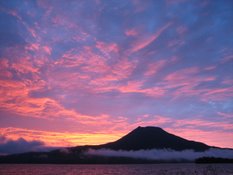
Just a Chihuahua sized entry this week. Winter came back for one last party (I hope) today. It was a crisp morning followed by freezing rain and then snow. All while the sun shined. It must have been a concentrated storm that blew over. There's buzz about when the Sakura, or cherry blossoms, will bloom. Spring officially begins March 21. Will it be before then? Who knows. Next week I'll be in central Kyushu, a few degrees or minutes latitude more South, so maybe I'll see them bloom there before here in Nishinomiya.

I like to take evening walks to unwind after the school day. Often I see owners and their dogs out for a walk, too. A guy who helped my dad with home improvement projects, Jim, said that if he ever reincarnated, he would like to be an American dog. They have THE LIFE, he says. Well, Jim has never been to Japan. I think these dogs have it better. I see numerous boutiques just for dogs. When its raining, every dog has a raincoat. When it's cold, I see dogs with more cover than their owners. Back in the 80's, there was a film "All dogs Go to Heaven". Did you see it? Well, I thought of a catchy title for the sequel to be set in Japan: "All Dogs go to Heaven, scratch that, Japan". Did you get the pun? For my native Japanese blog readers, "scratch that" is an idiom for "let me make a correction" and it is also what dogs to a lot: scratch themselves. Remember, you read it first on ABNW! Now I just need to go and buy the trademark for that phrase...

Also, please take note of the new icon on the sidebar: call me. This will connect you to my Skype account where you can call over the Internet for free. You'll need a Skype account, a microphone, and headset on your computer. Ok, so it's a little involved. But if you're savvy with this kind of thing, you're only a click away from calling me. Until next time, sayoonara!

3.06.2006

Chisai Progress in Nihongo


This will be a short entry because its almost bedtime here in the land of the rising sun. Actually today it was raining; a bummer after two beautiful days on the weekend. I've been planning my vacation when that comes after March 21. My girlfriend, Gilda, will come to Japan to join me for a trip to the west of Japan. First we'll go to Shikoku island to visit a friend of ours from Concordia Language Villages, Erinn. Then we're off to Hiroshima, where Gilda was a JET teacher for two years. Its also the hometown of this blog's #1 fan, Aki. After that, we'll go to the Kumamoto area of Kyushu island. We will do a farming exchange through WWOOF. We'll be there 5 days. Then make our way back to Nishinomiya.

People have always told me that Japan is an expensive place to live and travel. So far I've disagreed because my monthly expenses haven't been that high. But I haven't ventured too far outside of the Kansai region. When I checked out the prices for the Shinkansen bullet trains, I had to stop to find my lower jaw which had fallen to the floor. Yikes! Its pretty much the equivalent of an airplane ticket and takes just about the same amount of time. There is the Japan Rail Pass, but only tourist visa visitors are eligible for it. Being a savvy and budget minded traveller, I searched for an alternative. And found one. The Seishun juhachi no kippu (Youth 18).

This ticket allows you to travel anywhere in the country on local or rapid trains for 5 person-days during the major school holidays. In Japan there's 5 levels of speed on trains: local (slowest & most stops), rapid, express, limited express, and shinkansen. So in exchange for speed, you get price and flexibility. I suppose that this is not attactive for everyone who is used to travelling for the destination and thus getting there as fast as possible. Gilda and I like to travel more for the journey and take our time to enjoy the view along the way. My only concern is that my posterior may get a bit sore from six hours of sitting on a seat designed just for short trips. Stay tuned for a consumer report from the field on this exciting topic;)

Oh, so let me get to the title track of this blog post. I went to the Japan Rail station tonight to make a reservation for a special overnight train that many people with the Youth 18 ticket take: Moonlight Kyushu. Sounds romantic, eh? Gilda and I are taking it from Hakata near Fukuoka back to Osaka. This is a very popular train for people with this discount ticket because you save accommodation costs as well as time because its faster. So I planned out what I was going to say before entering the ticket office. I had all the necessary information. I said it to the ticket vendor. I clarified that I didn't want a shinkansen reservation. The Youth 18 ticket. On this day. At this time. 2 reservations. One-way. He understood! I thought this would be a big hassle, but it turned out to be rather straightforward. Fhew! I successfully accomplished a potentially complex language task. My Japanese language study has taped off a bit recently, but this experience has motivated me to pursue more study.

2.25.2006

Up the Yama, Down the Yama


10 days since the last post. In that time I've finished instruction to my third year students and prepared for administering the final exams which were Friday and Saturday. But probably the real reason that I haven't written is that I've had the Fever. Olympic Fever! I'm always a sap for the Olympics so when they're on, I'm watching. Being in Japan during the Olympics has certainly been an experience: we're ahead of Torino by 8 hours. That means that live coverage begins at 11 pm here. I'm usually going to or in bed by that time, so I've sacrificed a little sleep for some vicarious glory with the athletes.

Of course most of the coverage focuses on the Japanese athletes and their sports. The first week it was mostly women's curling. That's okay with me, I got to learn a lot more about an interesting sport. Chess on ice they call it. I saw one highlight of the men's gold medal game between Canada and Finland. With one stone, Canada used angles and ricochet to knock out 4 of Finland's stones. It was so precise. Beautiful. Anywho, the Japanese women did not advance to the medal round but beat Great Britain who won the gold medal last time. On Japanese TV during the Olympics or other times (I don't know), they have a tradition of receiving faxed letters and drawings of encouragement for the athletes. I got so caught up with the action that I decided to draw my own picture and fax it in. Unfortunately, the curling team was eliminated before I could find a fax machine. But, you're in luck: I'm going to publish it here on my blog for the world to see! Beneath the curling stone is says "Nippon ganbatte!" Which means, "Japan! Fight!" It's a typical cheer or encouragement. Japan has only won one medal these games, but it's gold and probably the highest profile event: women's figure skating. Shizuko Arakawa has been all over the news and has lifted the spirits of people the neighborhood.

Last week I visited a classmate from college who's teaching at an eikaiwa (private English conversation school) in Mie prefecture. He has the unique experience of being the only native English speaker in town. It is quite a rural place. You can literally see a waterfall and a mountain from his balcony. So beautiful. After a busy week of test preparation, I was excited to have 2.5 days to stay with him.

I was in Kyoto for church on Sunday when I began my trip. The national train line, JR, has friendly bilingual signs, but I didn't see my transfer station of "Nagoya" on the fare map. Except for the Shinkansen, the bullet train. At 4900 yen for a 15 minute ride, its quite expensive. So I bought a limited express fare for 2400 yen and set off. But the only trains with "Nagoya" on their destination list were bullet trains. So I got waived through the turnstiles by the conductors even though the computers rejected my ticket. Something was up but I didn't know what. So I got on the bullet train and got an unreserved window seat. Score! Except it was in the smoking car. Oh well. The view of the Japanese Alps, which rise abruptly and majestically with snow-covered peaks, was inspiring to the point of inducing guilt. "I'm paying too little for this wonderful experience," I thought to myself. And I was right. When I attempted to exit in Nagoya, I was directed by the conductor to the "fare adjustment" counter. I had to fork over another 2500 yen. Oh well, it was worth it.

The train to Komono, where Nate lives, approaches the Suzuka Mountains. The Rokko Mountains are the backdrop to where I live, but they don't rise 1000 meters over a flat plain. So this was very exciting. Here's a picture of my view from the train. Nate lives across the street from the train station and came out to greet me. Talk about a sweet location. He came to visit me for Thanksgiving last November and I was embarrassed at the size of my apartment because it actually is quite big compared to most Japanese living spaces. Nate's apartment is quite small by comparison, although I have no pictures to show for it. It was made even smaller by Nate's PhD work (Piled high & Deep) in every room. After catching up on years and months gone by since college and our last visit in Japan, we set off for dinner.

Nate has been here for about a year and a half, so he has developed a nice network of friends and eating establishments that he frequents. Being that most classes at eikaiwa are in the evenings, Nate doesn't cook for himself very often, so he goes to the restaurants of his students. He gave me a choice of his "frequent five". I chose pasta. So far in Japan, I have avoided pasta restaurants for two reasons: 1) I can eat a lot of pasta back in the USA whereas the kind of Japanese food served here is hard to find in good quality in the USA (just ask Gena and Craig about Kabuki in Pasadena); 2) I imagined pasta in Japan to be undercooked noodles with ketchup sauce and therefore not appetizing. Well, I was shamefully wrong in this case. I ordered a simple spaghetti set which included salad and tiramisu dessert. It was better than Olive Garden, giving it an above-average rating. The tiramisu even had real whip cream, something that few American restaurants can top without a hefty bill. So the after dinner buzz was going. What better way to top it off than with a trip to the onsen: Japanese bath?

It was very relaxing to soak in hot spring water and clean out the pores. They had a big screen TV with Olympic cross-country skiing on. What a great way to end the day. I was so relaxed that I slept in until 10 the next morning. Monday, Nate and I did personal errands. It rained all day, so outdoor recreation was out. Nevertheless, we visited the local temple (Buddhist) and shrine (Shinto). I finally learned the difference between the two. Though I was reasonably confused because often the two are right next to each other. We walked through the cemetery as the sober sky showered a cold, drizzly rain upon our umbrellas. People's final resting places are often on hillsides because of the scarcity of flat land that is reserved for rice production.

Tuesday morning, Nate left for Yokkaichi to teach a class. He dropped me off at the gondola that would take me up the mountain (yama). A school group arrived just before me. I could tell they were going to ski at the top because everyone was dressed in the same jump suit, hat and goggles. I went up a gondola with a ski school group and passed through thermoclines of fog which made for beautiful photographs. The summit of the mountain was covered in snow but quite warm and sunny. I hiked through the snow to the 1212m top (3972 feet). They say that you can see Mount Fuji and Lake Biwa from the summit, but there was a cloud cover that obscured my view. I was able to see an interesting shrine atop another peak nearby. After my trip to the summit it was time to come down. I had to begin my 5 hour journey home. It was easy to get lost in time with the wonderland feel of Mount Gozaisho, so I missed the most direct train back to Osaka. The second train had a few more connections and went a bit slower, but it made me a more hardened train riding veteran. I am becoming more of a train lover the longer I am here! Thanks for reading this far. I will try to write shorter and more frequent entries in the future.

2.15.2006

Meet Idrissou


Well, the apartment managers say that I can't have pets here. But I don't think they'll mind if Idrissou moves in with me. He's a black moor goldfish. He loves to suck on gravel, blow bubbles, and generally wiggle about all day while I'm at school. The care guide says this breed is quite hardy and can survive near freezing temps. This is good because it gets almost that cold in my apartment! I chose the name Idrissou because it was a popular name for men in Benin while I was there in the Peace Corps in 1999. Its a muslim name, I think. So I thought it would be a good name for a black moor. What do you think?

Meeting Haiku

Wednesdays always make good blog posting days because I've got a 2 hour chunk of time when I can sit quietly and think. They're the weekly faculty meeting. Today I used the time to read course evaluations, write in my teaching journal, and join my fellow American ATE in a friendly competition of haiku poetry. Here are the 5-7-5 syllable poems that we created:

drip of foreign words
into murky conprehension
drown my feeble mind

a steamy kettle
words distilled from Japanese
dew not digest well

circle of sensei
throw thoughts into the room like
skipping stones in mud

a heater rumbles
ambient language playing
a song I only feel

sleepy sun setting
and heaving droning voices
pull my lashes down

this meeting bunker
could survive Apocalypse
will it ever end?

2.12.2006

Getting back to the blog

Sorry its been almost two weeks since my last post. What have I been doing? Working late at school and catching up on rest. The 3rd term of the school year is the shortest and I was told by the other ATE that I would be teaching less due to all the special events, but the intensity of the school week seems to have increased.

For the first time I have had to eat a コンビに便と (a convenient store boxed meal) for dinner because I left the faculty room at 8:30 pm. And it isn't like I'm working at a relaxed pace for longer hours or dilly-dallying. If I'm not teaching, I'm planning the next lesson and creating materials to teach with. This term has given me the opportunity to apply what I've learned from last term regarding my students and the activities that work well with them. As a result I have been putting more time into the design and order of my lessons to make them more linguistically sound.

Well, I'm trying to make my blog more about my cultural encounters here rather than a teaching journal, so I'll end the teaching analysis there. Instead I'll just showcase a few photos that tell a story about my life in the past two weeks.

It snowed in Nishinomiya on the 5th. This is the view from my apartment door. It melted by noon, so it didn't disrupt activity in town. It does get quite cold at night with the thin insulation, but I sleep soundly with plenty of blankets!

This picture is actually from November when I went to Toyama on a WWOOF assignment. I almost went WWOOFing again this weekend but backed out from going to a farm in Nagano because it would have been too long of travel for too short of a stay. Maybe when I have 5 days during spring or summer break. Anywho, its a beautiful silhouette of a sunrise over the Japanese Alps that sets me thinking about the "other" Japan or self-sufficient organic farmers that seems so far away from the urban conglomerate of Osaka-Kobe.

Care for a $50 melon? That's the price of this "gift musk melon" at the local supermarket. For something that most Americans take for granted in their fruit salad, musk melon and other fruits (like grapes and pineapples) are a special gift for expressing appreciation. Given this, you could imagine the feelings of the Japanese campers at the English Village of Concordia this past summer when fruit salad was a daily item at lunch. Overall, fruit is more expensive here. I paid 300 yen ($2.50) for 5 bananas the other day. In the US, its 50¢ a pound, not a banana!

The Christian Science Monitor featured a list of the 10 most expensive cities in the world to live in (according to the cost in USD of goods and services). Osaka ranked 4th; Tokyo was 2nd (after being #1 for 14 years); Oslo, Norway was 1st. No US cities were in the top ten. According to this ranking, you would think that I'm losing money left and right. Not so. I don't consume a lot of goods, so I'm able to save money. But my grocery bill is substantially higher than what it was in Monterey (adjusted for the pauper's diet I was eating on grad student budget). So it goes to show: expensive is relative to the type of consumer you are.

See you next time in the blogosphere!

2.01.2006

Can you ever be over-paid for over-working?


Spending 13 hours at work doesn't leave much time for blogging. Unless blogging is your job! Well, we all dig our own holes. Its Wednesday, so that's meeting day which makes it a rather long one. But yesterday was 12 hours. I'm not really complaining because my compensation package tells me that I'm valued and therefore I'm willing to put in the time to reciprocate. If convenience store clerks were paid $30/hour would they enthusiastically greet and help every visitor?

I'm no economist, my friend DoAnne is, and I don't have an MBA, my cousin Fin does, but wouldn't increased minimum wages impact the crime rates and quality of life in the USA in positive directions? Sure businesses would complain about the undue burden and how it would increase their costs, but aren't human costs the ones worth paying? And wouldn't those same cunning businesses find another formula for success if one of the givens was a living wage?

What about raising other operating costs like pollution mitigation or reduction to lower the impact on climate change? Perhaps a short-term downturn in the economy, but once the companies accepted the new modus-operandi, they'd find a way to succeed. Being an investor myself (in human lives as an educator instead of in financial sectors), I'm comfortable with the idea that somethings worth doing don't have a tangible return on investment. I try to buy some organic foods because I know that it supports a process of growing food that lowers impact on the land. I'm not a totally organic consumer, but I do what I can within my budget.

Okay, so I'm going on a tangent here. I hope I'm not being too political here, I hear it from the sooner if I am, just taking a position to invite comments. Maybe higher wages all across the board affecting the crime rate and quality of life is only germane to the situation in Japan. I sure know that if Americans lived in the space and proximity to neighbors that Japanese do, the crime rate would certainly go up with all the nerves-getting-on that people will do! Its the public manners, or the appearance of (if not actually expressing), in Japan that makes the peacefully close living possible. Maybe my view will change the longer I'm here, but that's my persective from now.

1.22.2006

Look out Baywatch! Here comes ABNW!

Thanks to a recent Christian Science Monitor article on XML/RSS feeds, I have added a feature to my blog so that you can bookmark it and be notified whenever I update it. Now I know that my most dedicated fans (Aki, Gilda, ...) look for updates everyday and nag me when I'm a day late. But the rest of you casual viewers could use some sort of notification when I update this blog. Now there's a way.

RSS stands for "really simple syndication". At one point, David Hasselhoff's Baywatch was the most synidicated TV show in the world. It is my humble hope that my blog will be the most syndicated blog in the world. Hah! That's good for a joke. But, seriously now. If you'd like to be notified when I update this blog, there's a few things you need to do:
1. Use a browser like Apple's Safari, Mozilla's Firefox, or Microsoft Internet Explorer or an aggregator like My Yahoo or Google's Reader.
2. Click on the link to the right of this entry entitled, "syndicate this site (XML)"
3. Bookmark the page on your browse. If you are using an aggregatior, copy and paste the feed address into the field where your subscriptions are stored.

In the future, you should see a number next to the title of the bookmark, indicating the number of posts that you haven't seen. Forgive me if this doesn't work for you. I'm an English teacher, not a computer scientist! I know how to do it on my Mac, but I realize that everyone reading my blog isn't on a Mac (yet;).

Now to the entry I promised.

I went to the Osaka aquarium on Friday. Their presentation was unique: ecozones around the volcanic ring of fire in the Pacific Ocean. They've set up the museum so that one must see all of the exhibits before exiting. You ride an escalator up to the eighth floor and travel in a descending spiral to the first floor where you see the large central tank which houses their prized possession: a whale shark. I made sure to get an English audio tour so that I could appreciate the exhibits more.

The display gave the visitor an holistic view of life in the Pacific Ocean. Somewhere the brochure mentioned the Gaia theory of Lovelock. This makes connections between all lifeforms in a web of life. Although the much touted Whale Shark seemed smaller than advertised, at 1100 kilograms, I think that it was big enough! The Manta Ray was also fascinating with its loop-de-loops over the aerator. Was he getting air or plankton?

I couldn't help but make comparisons between this aquarium and the one I know so well: the Monterey Bay Aquarium. My sister, brother-in-law, and aunt gave me a two-year family subscription to it so I could take all of my friends there. (Thanks again Jen, Dave, and Tina!) Their admission prices are about the same and you probably get more to see at the Osaka one. So on these facts alone, I could see why some study abroad students of mine at MIIS in February 2005 didn't like the MoBay aquarium. "Japanese aquariums are better" they said.

But what the MoBay aquarium had that I didn't see in Osaka (my Japanese is limited, but they seemed to give bilingual interpretive signs almost everywhere) was extending the facts and situation of the oceans into the family room and kitchens of visitors. Inspiring visitors to take action and change behaviors to save the oceans.

Before I went to Osaka, I happened to read an article about whale burgers in Hokkaido and dolphin hunting in Wakayama (near Osaka). I admit that different cultures have different values towards man's relationship with nature and by extension animals. But when the entire world except Japan recognizes the moratorium on whaling, that strikes me as something different than cultural values. Is one's village annual harvest of over a hundred top predators sustainable regardless of being ethical or unethical? This is where a museum can make a difference because it gives an in-depth experience and can influence large numbers of visitors to change the kinds of fish they eat. And these are the same people who can influence public policy. Aquariums shouldn't be about preserving an example of a species to ward off extinction. They can serve a purpose by connecting people with the natural world.

What do you think? I know there's plenty of treaties that the USA is the only one not to sign. Perhaps it thinks there's some competitive advantage to holding out. That seems like an expression of economy, not culture. But I could be wrong.

1.12.2006

A Nuclear Discussion


This Christmas I sent a postcard to friends and family giving the usual update of a Christmas card. Here is the text of the card, in case you didn't get one:

Dear friends and family, I'm back with my Christmas postcards so that means that I'm making more than $7,000 this year! Where have I been since my Christmas 2002 card? I moved to Monterey, California to study at the Monterey Institute of International Studies for an MA in Teaching English to Speakers of Other Languages. I graduated in May of this year. Now I am an assistant teacher of English at a private, Christian junior high school in the Kansai area of Japan. It is my first experience to work in a country where I haven't learned the language before I arrived. Nevertheless, Japan is a daily fascination of food, traditions, technology, and gracious people. Six weeks into my stay here I took a school trip to Hiroshima. We visited the Atomic Bomb Dome and the Peace Memorial Park. Before I waffled on the USA's use of the bomb to kill at least 80k civilians because it would save American lives. When I left, I couldn't imaging putting a national label on life to justify saving one and sacrificing another with such a horrendous act. If everyone could visit Hiroshima, I think that we could have peace on earth much sooner. With peaceful wishes for Christmas & the New Year

My motive was to share my personal transformation of viewpoint after visiting the Peace Museum in Hiroshima. I wanted to make a connection between the building behind me in the picture and peace at Christmas. When I went home for Christmas, some people told me that my Christmas card was too political. In retrospect, I think that I could have worded the card differently to focus more on peace instead of who did what to whom. When I returned to Japan after the Holidays, I received a letter from a friend who has had significant experience in nuclear physics. He had a unique perspective on what I wrote in my card and I would like to share it with you. Here is what he wrote:

(December 19, 2005) Dear Jeff,

Circa 1947 I wrote a paper for my international relations professor on the subject of the decision to use the atomic bomb. This was at Brown University. My conclusion was that it should have been used on a military area with warning and not on a city, no matter how much war industry it represented. Interestingly Kyoto was on teh top five list and was ahead of Hiroshima. The secretary of state took Kyoto off the list before Truman made a decision because he, the secretary, knew Kyoto was a very important historical and cultural center, having been the capital in years gone by...
The bombing of Dresden and the fire bombing of Tokyo, particularly the latter may have caused more deaths. No matter how you slice it, war tends to drag all parties into a whirlpool of depravity. In this case a great deal of soul searching went into the decision, but the decisionn-makers had no concept of the awfulness of the weapon. Today, people generally, and many political types have no concept whatsoever. I worked for the Los Alamos Scientific Laboratory and participated in bomb tests in the early 1950s, and being a physicist and all, had a notion, but it was not until I witnessed explosions and participated in the initial test of the hydrogen or fusion weapon did I begin to see what was implied. I became acquainted with Ernest Pollard, a physicist at MIT who worked at which he self published. It is a novel about the detonation of one low yield hydrogen bomb over NYC [New York City]. He describes in detail the effect on the United States. Aside form the metropolitan NY area, the entire country was affected because of the interrelated nature of our society and civilization. It was terribly edited, and I volunteered to redo it and have it republished; however it was too much of an emotional experience, and I did not need that sort of thing to deal with. He asked that I write a chapter about the effect on the cities and towns on the Long Island Sound extending all the way to RI [Rhode Island].
I think the North Koreans and the Iranians must be disarmed. The Russian arsenal must be controlled. I am under the impression that if weapons are not "refurbished" they tend to degrade, and if detonated will not do as much damage, but nevertheless spread a lot of radioactive material over the countryside, and with age they can become duds. How old or how probable this is, is not known to me. The US arsenal has been shrinking, and since the end of the cold war has dropped by 75%. There are less than 5000 weapons in the US inventory, and I understand it is being reduced monthly. It is a major project, and as you know we have given money to Russia to do the same. There is a book by Stansfield Turner (Adm. USN Ret.), former head of the CIA, that suggest how to put the genie back in the bottle. You might look it up. It may be called "The Trimtab Factor". I don't have time to look for it now in my library.[My friend emailed me back when I requested his permission to publish his letter on my blog. The real title of Adm. Turner's book is "Caging the Nuclear Genie" (ISBN 0-8133 3328 - 8)] It is curious that you chose this subject to re-establish contact at this time of year. Next time tell us about the beauty of Kyoto.


I suppose that I was trying to make a point by bringing up this issue at Christmas time. Can the message of the Prince of Peace, whose birth is traditionally celebrated on December 25, overcome the most destructive weapon that mankind has ever created? I believe it can. But if no one talks about this possibility when most people are listening to the Christmas message, then I think that people are less likely to remember it when faced with a nuclear decision in the future.

As a "child of the 80s" I can remember the fear of launching an array of nuclear weapons between the USA and USSR before the end of the cold war. I think the "children of the 00s" may have a similar feeling about people who want to detonate just one nuclear weapon to make a statement for their cause. The Message of the Man who blessed peacemakers is no less relevant today than in the 80s for bringing peace through nuclear nonproliferation and disarmament.

1.09.2006

A Badge of Photos from the Train Trip


Return at Twilight

IMG_0236.JPG
IMG_0236.JPG,
originally uploaded by fuzzyjefe.
I made it to Himeji, now its time to turn back and see if my theory works. Will I be charged an arm and a leg or just some pocket lint? Read the entry below to find out!

Coming of Age Day

IMG_0182.JPG
IMG_0182.JPG,
originally uploaded by fuzzyjefe.
I got over my shyness to ask these women if I could take their picture as they passed through the train station. I think they're happy that I asked.

Take a free ride on the Sanyo Railroad

It was freezing in my apartment and my aircon unit wasn't spewing out
hot air. So I decided to get out of the house. But where could I go?
All public buildings were closed due to the holiday. So like any
valley girl that I know, I head to the mall:) They had some
activities: mochi making, spinning tops, and puppet show. I don't know
if they were related to coming of age because it was only little kids
indulging. But I didn't care, anywhere there's free food, you know I'm
there. Then I had McDonalds, value meal cheeseburger, shake and fries.
that didn't sit well with me afterwards. My first Mickey D's since
after ELV '04. Then I went to the train station. I thought it would be
a good place to find girls dressed up in their coming of age day
kimonos. I was right. I looked up the phrase for "can I take your
picture" (shashin ee desu ka?) and approached some girls. This is hard
for me because I'm so shy of imposing myself on strangers. But they
all obliged (who wouldn't want some attention on their special day).
The kimonos were beautiful! I'll put up a slide show on my blog.

I didn't want to go back home to my cold apartment, so I decided to
get on a local train and just ride. The commuter train system is
billed like Washington, DC or London: you pay based on where you get
on and off as marked by your ticket. So I hypothesized: what if I ride
as far as the system goes, come back, and exit the system at a stop
that costs 150 yen? Otherwise it would cost 2000 yen if I got off at
the end and then reentered to come back.

So I went west to the huge castle town of Hemeji. I read my book,
looked out the window, and people watched as they came and exited the
train. We approached the shore line, went under a gondola line to
connect with a mountainside community, saw a huge suspension bridge to
connect with another island, Awaji. After 2 hours on the local train
we arrived in Hemeji. By this time the sun had set and the afterglow
of twilight was creating a beautiful palette on the sky. No sign of
the fabled castle, but I had ridden to the extent of my curiosity. Now
it was time to go back.

I got on the limited express going back. Its terminal station was the
Hanshin line and I entered the Hankyu line. If I got out at the wrong
company's line, I feared that it would report the rider anomaly to the
authorities. I decided to get off at a stop where I could transfer.
Asked a perfect stranger where to transfer and he told me to wait for
the next train which would take me right there. It is easy to see how
Americans can get used to this country with the efficient
transportation and comforting safety and kind feeling of approaching
strangers for help. I reached Nishinomiya within 45 minutes. Now the
test. I put my card in the machine. A slight delay. My heart takes an
extra beat. Puhchew! Out it comes with 150 yen taken off. SCORE! I got
a tour of the south coast of Hyogo prefecture for 150 yen! Ah the
simple pleasures of a man who can't speak the language to make friends
to hang out with or read the labels on his heating unit control panel
to stay warm in his home!

So that was my day. Now I'm freezing back at home. I've decided that
the best activity to do this winter is to go to bed early and cozy up
under the covers. I get 9 solid hours of sleep and I don't have to
freeze or do any mind numbing activities like Internet or Japanese TV
which I don't understand. Of course when the term starts I may need
that 9-10 hour, but oh well.

12.31.2005

More about Doughboys!

Thanks to an alert reader, we now know more about doughboys!

From: Doughboy Center: The Story of the American Expeditionary Forces
 
For us today, and maybe for all Americans who will follow, the Doughboys were the men America sent to France in the Great War, who licked Kaiser Bill and fought to make the world safe for Democracy.
 
The expression doughboy, though, was in wide circulation a century before the First World War in both Britain and America, albeit with some very different meanings. Horatio Nelson's sailors and Wellington's soldiers in Spain were both familiar with fried flour dumplings called doughboys, the predecessor of the modern doughnut that both we and the Doughboys of World War I came to love. Because of the occasional contact of the two nation's armed force and transatlantic migration, it seems likely that this usage was known to the members of the U.S. Army by the early 19th century.
 
Independently, in the former colonies, the term had come to be applied to baker's young apprentices, i.e. dough-boys. Again, American soldiers probably were familiar with this usage. This version of doughboy was also something of a distant relative to "dough-head", a colloquialism for stupidity in 19th Century America. When doughboy was finally to find a home with the U.S. Army it would have a disparaging connotation, used most often by cavalrymen looking down [quite literally] on the foot-bound infantry.
 
In examining the evolution of doughboy these pre-existing streams of application need to be kept in mind. There is, however, an absence of literary citations clearly connecting either to the American miliary. Doughboy as applied to the infantry of the U.S. Army first appears, without any precedent that can be documented, in accounts of the Mexican-American War of 1846-47.
 
But wait, there's more!! For more information on the history  and origin of the "doughboy," visit this site
.

12.30.2005

Catalina Island, California


My girlfriend Gilda and I took a catamaran out to Catalina Island today. We were prepared to pay $50 each for the roundtrip boat trip. Instead, a good samaritan gave us two free tickets as we waited in line. We will certainly pay it forward in the future. The ride out was a little bumpy, but nothing two water lovers couldn't handle.

Upon arrival to the island, we went to the bike rental shop and took out an 18-speed tandem bike to conquer the hills above Avalon. It turns out those are off limits for tandems, but we still had a whole day of exploring. I had ambitions of circumnavigating the island, but when I learned that the island is about 1/2 the size of LA, we decided to save that journey for another day (or week more like it!) It takes some coordination and communication to stay balanced on tandem bike. Good practice for couples!

We trudged up the gradual valley grade to the Wrigley Memorial Botanical Garden. Yup, the same person whose name graces the friendly confines of the Chicago Cubs. Turns out he owned the whole island during the 20s and into the 30s.

Then we coasted down the slope to the world famous Casino. It's no Monte Carlo, but the Casino is the landmark of Avalon. Gilda and I learned that the Casino on the island isn't a place of gambling, but just a meeting/entertaining place that is true to its definition in Italian.

We found some cozy cafes to enjoy tea, chai, cold french fries, buffalo burgers, and ice cream. Gilda and I both share the favorite flavor of butter pecan! Overall it was a very special day. A unique way to close out 2005: sharing a special moment with someone you love on an isolated island from the #2 metropolis in the USA. 2006 here we come!

12.29.2005

A visit to my hometown

A visit to my hometown
A visit to my hometown,
originally uploaded by fuzzyjefe.
Yesterday I visited Naperville, Illinois. It is my hometown. This is a memorial to the "doughboys" of World War One. I don't know what a doughboy is. Maybe it is someone who went to fight in that war. This statue is right next to the train station, not the centre of town. Naperville has grown from 40,000 in 1983 when my family moved there from Venezuela to over 140,000 in 2005. It has been a fun week in the Chicago area. Today I fly to Los Angeles!

12.19.2005

this is an audio post - click to play

Bed Head KGJH

Bed Head KGJH
Bed Head KGJH,
originally uploaded by fuzzyjefe.
This is the "in" style of haircut at school. Short hair gets texture with styling gel. In junior high I sculpted one side of my hair straight back while the other flopped over. Now I'm embarrassed about my lack of style back then. Will the "crazy bed heads" of Japan feel the same way? Check back to this blog in 2017 to find out!

A Snowy Kyoto Morning

A Snowy Kyoto Morning
A Snowy Kyoto Morning,
originally uploaded by fuzzyjefe.
A fresh white blanket... The morning sun slowly climbs... A clock is ticking

12.09.2005

this is an audio post - click to play

Dotombori: Osaka's Neon District

Dotombori: Osaka's Neon District
Dotombori: Osaka's Neon District,
originally uploaded by fuzzyjefe.
I visited the Japanese urban phenomenon of Dotombori tonight. I desparately needed to get out after a week of home-school-home and cold weather. There's nothing like neon lights to get you stimulated again! I went on a ferris wheel that surrounds a buiding here. It offers great views of the neon signs that line the pedestrian mall. I think the signs are so impressive because the streets are so narrow: the line of sight is so narrow, businesses keep moving up and up to get the best line of sight. The result is an exciting night out. However, I wouldn't want to live in this neighborhood. I'd never get any sleep!

Dotombori: Osaka's Neon District

Dotombori: Osaka's Neon District
Dotombori: Osaka's Neon District,
originally uploaded by fuzzyjefe.

Dotombori: Osaka's Neon District

Dotombori: Osaka's Neon District
Dotombori: Osaka's Neon District,
originally uploaded by fuzzyjefe.

Dotombori: Osaka's Neon District

Dotombori: Osaka's Neon District
Dotombori: Osaka's Neon District,
originally uploaded by fuzzyjefe.

Dotombori: Osaka's Neon District

Dotombori: Osaka's Neon District
Dotombori: Osaka's Neon District,
originally uploaded by fuzzyjefe.

Finals at the Junior High

Right now its finals at the junior high. Reflecting the Japanese value
of group unity, students are organized into 45-member classes. They
travel from subject to subject with the same members of their class.
At finals, the entire grade of 180 students takes the same subject
test at the same time. Naturally the teacher of that subject cannot be
in 4 classrooms at once, so we have proctors in four classrooms and
the subject teachers stay in the faculty room. The subject teacher's
responsibility is to visit each classroom and see if the students have
any questions. Usually students' "questions" are covert attempts to
get outright answers. So far, I've been hip to their tricks. Because
my Japanese is not so good, I don't proctor the exams. Parents have
been concerned in the past that their child won't get the help they
need if the English teacher doesn't have the language to explain a
concept. I'd agree with them. Meanwhile, it makes for a slow day. But
it is nice to be on the other side of the test, where all my work is
done (except for grading) and the onus is on the students to perform.
Japanese classes don't have the discussion/interaction that American
classrooms do, so the teacher must take the floor for the entire class
period. Not my idea of learning, but I'm not here to change things.

12.07.2005


I took this photo on the same roll as the tree child below. Many people love to take walks and see the fall foliage in the Imperial Gardens. Others read or share a moment with loved ones. This photo shows all three coming together. A couple flirts with a camera phone in the background. Is the single girl dreaming of someone as she reads? Is the older man remembering his youthful days of romance? A photograph inspires the video camera of the mind to take over. Each viewer directs the scene with their own memories and dreams.

Food, Finals, and Fun!

Its Wednesday again, but I'm going to spare you the details of the faculty meeting. Not that it was so bad or long, but just that it was unexpectedly short so there's nothing of consequence to rave or rant about.

Classes have finished and finals have started. Its my first time to be on the other end of finals. This time I'm making the test instead of taking it. So far I've learned that the days get less busy for teachers during finals. Proctors administrate the tests instead of the teachers themselves. This is because 4, 45-student classes take the test at the same time. My role is to check in halfway through and see if students have any questions. After the 45 minute test period, me and my co-teacher get 200 tests to hand grade. Now I see why teachers design multiple-choice tests to grade on Scan-Tron sheets: grading convenience! But it took me about 3 hours to grade 180 tests. Some multiple choice, some open entry. Enough of this testing mumbo-jumbo, let's get to some Japanese culture.

Winter is here! It snowed on Monday night, but it melted as it hit the road. I only noticed the snow from someone's shaded lawn in the morning. My heating unit is mounted about 8 feet up on my wall. I know the Japanese are excellent planners, but if hot air rises, there's not too much further for the heat to go before it lingers on the ceiling and escapes my cold feet. But then again there's another nifty invention called the こたつ"kotatsu" which is a blanket-rimmed coffee table with a heater underneath it. Talk about efficiently warm tootsies! So Yao Ming can enjoy my heater while I take the kotatsu! Meanwhile I'm wearing my Navy Pea Coat, skull cap, brown crusher, and woven scarf to ward off the winter cold. My students are wearing the thin coats of their uniforms and few other accoutrements. What are the Japanese eating to make their blood so thick? Don't tell me its 納豆 (nattoo, fermented soybeans). I don't think I'm ready for that yet. In Jamaica, all the kids tested my toughness by asking me if I eat "spring chicken" which I learned was frogs's legs. Considering that I'd eaten snake and rat in Benin, West Africa, I wouldn't rule out eating an amphibian. Nevertheless, I didn't eat frogs legs while in Jamaica. Here in Japan, its nattoo. I'm told you either love it or hate it. Either way, the smell is strong. Somedays I'm greeted with the smell as I enter the faculty room at school by a teacher who eats it at her desk which is adjacent to the entrance. So far I'm not enticed.

One thing I have gone out on a limb to try is 生卵 (nama tamago, raw egg with soy sauce and rice). I was introduced to it when I was WWOOFing it in the hills above Toyama. My hosts had a free-range organic chicken farm, so the eggs were fresh each day. I've been conditioned to believe that raw eggs carry salmonella or whatever, so at the time I was torn between trying something new and fearing repurcussions from it after. I balked at eating the nama tamago at the farm, but on Monday I took a free-range egg and cracked it over my steaming 嫌前(gen mae, brown rice), added some soy sauce, stirred it up, and wolfed it down. The egg is more of a binding agent than a flavor enhancer, so it didn't taste that bad. I'm not having it every night yet, but maybe again.

Okay, big tangent there. Sorry. It will be just two now before I fly Chicago for Christmas with the family. All the siblings are coming to Chicago to celebrate. I don't think we've been together for Christmas since 2002. Its been so long, I'm not even sure. But its certainly something to look forward to. The blogs will continue from Chicago. I think the reentry and pause moments of international living are just as insightful as the immersion ones. For example, I don't think I've learned a lot of Japanese over the past 4 months. But perhaps when I fly back to Japan on January 6th, I'll realize how much I know. And that goes for cultural insight too. I don't think I've grasped too much, but coming back again I'll get a new perspective. I will be missing one of the festive times of year: Christmas and New Years. Christmas in Japan is celebrated a little bit differently than in other countries. Perhaps next year.

In the next week, I'll try to take a trip into Osaka or somewhere else of cultural significance to have another story to tell you. Thanks for keeping in touch with me through the blog!

11.30.2005

Enduring the marathon...meeting

Wednesdays mean faculty meetings at Kwansei Gakuin Junior High. Last week we were spared because it was a national holiday. I should have seen it coming: this week's was going to be long. 3 hours. In which I didn't say a word. And I understood about 10 words in the meeting. But I've learned a lot from these meetings nevertheless.

Earlier in the month I was getting perturbed when students would sleep in my class. But then I realized that I sleep during these faculty meetings when the principal is talking and he doesn't get his feathers all ruffled up.

Tonight a few teachers discussed an issue for an hour of the 3 hour meeting. It was whether to have the school Christmas parties by class or by house. At our school, each grade is divided into 4 45-student classes. Students move from subject to subject, learning with the same class of students all day long. Houses integrate the grades and classes. But the students do less activities with this group. So teachers were discussing the merits of spending more time in houses or classes. None of the teachers got heated in the discussion, just animated with smiles and a series of points. In the end, the principal said a few comments and the bilingual teacher next to me told me that a concensus had been reached: students would have their party by house.

So I've learned that meetings involving everyone, participated in by fewer, serves to put everyone on the same page of all the issues of the school. I think this helps the management style where there are few people with executive authority on school issues and more people with partial responsibility in a lot of roles at school.

I've changed browsers to compose this post and found that the hotlink option has resurfaced. So now my blogs can get more interesting with some links. I'd like to link you to a fellow English teacher whom I know from Concordia Language Villages. Erinn Groeltz is a JET teacher on the island of Shikoku. Check out her blog here. She seems a little more embedded to the community with her language skills and prior study of Japan. Enjoy!

11.27.2005

Virtual Daydreaming 2

I just discovered that my blog commentary on the picture below posted
to flickr instead of this blog. So here's what I wrote so you can see
them together on this page:

Isn't this a fantastic shot? My friend Nathan said it was something
out of "Crouching Tiger, Hidden Dragon" where martial artists run up
bamboo trees waving in the wind. Actually it is a little girl in a
maple tree in the Imperial Garden of Kyoto. She was put up there by
her father for a photo op, but I captured it too. Like something out
of a dream... that's what I've been feeling like for the past week.

Wednesday was Labor Day here. We got the day off from school. Thursday
was Thanksgiving in the USA, so I called up my expat friends Nathan
and Leon to make a meal of it. I'd heard that the Sheraton Kobe was
offering a Thanksgiving Buffet on Wednesday. Nathan came 3 hours by
train and Leon came down from his mountain apartment to Rokko Island
for the meal. It was touted as a Thanksgiving buffet by the American
coordinator for the hotel. So we had some assumptions about the menu.
As we walk to our table, past the buffet, we can't spot the chef with
cutlery in hand to carve a turkey under heat lamps. No yams, mashed
potatoes. Nothing. Well, not nothing. But nothing familiar to
Thanksgiving. It looks just like a pan-Asian cuisine. We ask the
waiter. "Oh, that's for dinner." Great. So much for delivering a taste
of home to my friends. The waiter comes back and says cryptically,
"they're preparing the turkey now." Leon interpreted that to mean,
"for dinner." But finally the waiter gestures over towards the buffet.
We see it. Arranged in slices like silver dollars are "turkey with
cranberry sauce." This the sole Thanksgiving item in the buffet. We
laugh it off and get 4 plates of food by the end of the meal. So we
got our money's worth for the buffet, but not what our stomachs were
expecting.

I haven't been forthcoming with my blogs on schedule because school
has been getting quite intense over the past two weeks. Finishing up
the term. I have been working hard to leave my lesson planning at
school so that I can enjoy an evening at home without more work to get
back to. I finally did that on Thursday and felt on top of the world.
That feeling lasted until Friday morning when I neglected something in
the lesson plan and threw my co-teacher and students for a loop when I
deviated from the LP to fit it in. That sent me into a spiral of
frustration that I only got out of Saturday evening. Perhaps it was
exacerbated by lack of sleep during this week when I've been staying
late at work and then staying up late at home.

Staying up late at home has been induced by my love for technology and
gadgetry. I have recently become more interested in podcasting because
I have found out it is possible for me to produce a podcast almost for
free. So I've been surfing the web learning how to do it and testing
out software applications to do it. I don't have much of an angle for
a show right now: there's already EFL teachers in Japan with a
podcast. In due time, I'll have something. I just need to get on top
of my teaching first.

And the countdown clock has begun for my Christmas return to the
States. So I think that is making me think of places anywhere but
here. However, nowness is a good quality. I need to be focused on the
now instead of worrying/longing for the future. That will take care of
itself. Thanks for reading and I'll be back next week!

Virtual Daydreaming

Virtual Daydreaming
Virtual Daydreaming,
originally uploaded by fuzzyjefe.

11.19.2005

The restaurant less eaten by

Two restaurants lined up on a street... so begins the poem by Robert
Frost. Oh wait, maybe I have my facts wrong. But if Mr. Frost visited
Japan with me, he may have written that line. After working late at
school, I decided to eat out because by the time I could have made
something at home it would have been bedtime.

So I decided to go to my usual ramen shop. I'm trying to be a
connoisseur of ramen while I'm in Japan but I haven't gotten to far
afield in the noodle shops around my own town. Just this one on the
street across the train tracks, the school cafeteria, and the Nissen
instant noodles. Yes, I admit to eating instant noodles in Japan where
I can get fresh ones. But I thought the instant noodles would be
better than the 10¢ ones that slowly kill you with preservatives in
the powdered broth that starving grad students eat back in the States.
These instant noodles came in a nice looking package and they did have
a tantalizing piece of dried pork and radish in them, but after the
boiling water soaked the noodles, they were the same as the 10¢ kind
back home. But I'm totally going on a tangent to my open story.

There's a red lantern restaurant next to the ramen shop. I asked my
friend and teacher mentor Aki what kind of restaurants are those with
these lanterns and drapes that keep passers-by from peering in. Aki
says these are the local watering holes where people go for good
times. Don't think Cheers! with Cliff Claven and Sam Malone, but just
a low key restaurant where people can relax and drink and eat. Well,
I'm not much of a drinker but I decided: what the heck?!

As soon as I slid open the door, there was a sudden pause in the sound
and activity of the restaurant. It about as big as a reception room,
not a sweeping Denny's or anything. All 8 people stared at me without
a sound as I entered. Immediately I knew this would be a wonderful
dining experience. They didn't expect a foreigner to come to their
tucked away place. I had found someplace special. The proprietor moved
around some regulars at the bar so that I could sit alone and watch
Japan vs. Brazil women's volleyball. I took a menu and could read half
of all of it. That means that I could read the hiragana/katakana
syllables that come after verbs and foreign words but not the complex
kanji for the main ingredients.

So I went to strategy "B": sore wa nan desu ka? What is that? I
pointed to my neighbor's dish and asked. He didn't even know. He had
to ask his buddy from whom he'd been separated since my arrival. He
said something that I didn't even understand. The point isn't to
understand, its to establish some interest and interaction. Then I
pointed to a sizzling pancake of diced vegetables, noodles, and
mayonnaise. Okonomiyaki. My girlfriend Gilda says that Hiroshima and
Kansai are famous for their okonomiyaki, so I knew that I had to try
it. The chef asks me if I want seafood or beef. Well, I only picked up
beef but I saw someone else getting seafood so I'll have to try that
next time.

Cutting food with chopsticks is difficult, but it can be done. Even
beef doesn't stand a chance with my hashi cutting skills. A successful
dinner. I overcame fear of something new and potentially not delicious
and found a fun place with helpful people and delicious food. I chose
the restaurant less eaten by, and that has made all the difference!

11.13.2005

Mother and Child

Mother and Child
Mother and Child,
originally uploaded by fuzzyjefe.
Nara. In addition to the Todai-ji temple, there is another other sacred attraction in Nara. Deer. What you can't see in this photo are about 6 deer poking for position to get the crumbs of food from the child in her mother's arms. The deer are considered sacred here so I don't think the population is "controlled" like I'm familiar with in the States. Instead, the deer are fed by all the visitors. They become quite aggressive to the tourists, but that's part of the excitement of visiting Nara.

I like to take this kind of candid photograph of normal people where ever I travel. These two were a good subject. Many families come to Nara to learn about the roots of Japanese culture. The city provided me with insights as well.

Todai-ji Temple

Todai-ji Temple
Todai-ji Temple,
originally uploaded by fuzzyjefe.
For some Buddhists in Japan, this is a sacred destination. For me last Wednesday, it was also my destination though for less holy of a reason. I wanted to see if I could fit through Buddha's nostril and receive enlightenment. Todai-ji houses a statue of Buddha that is probably 10 stories high. So accessing the nostrils is no easy task. And can you believe that the supervising monks won't let you climb up to try? ;) So where did I get this cocka-mamey idea to fit through Buddha's nostril? Well, the guide book. And they have carved a hole through one of the huge pillars in the temple that is supposed to be the same size as Buddha's nostril. Thanks to so many people who have gone before me, the hole in the wood was quite smooth and perhaps a little bigger than when it was first cut. So I put my arms over my head and wiggled through. On the other end, I felt a little light-headed so I guess that's as close to enlightenment as I'll come on this effort!

Atomic Bomb dome

Atomic Bomb dome
Atomic Bomb dome,
originally uploaded by fuzzyjefe.
October 10: Hiroshima. This blog entry is out of chronological order, but I want to post more pictures. Here I am in front of the Exhibition Hall which was very near ground zero when the bomb exploded overhead. Ironically, because it was directly beneath the bomb, its location helped it to remain somewhat intact because the force of the explosion did not blow it over.

Looking at the modern buildings in the far background, you wouldn't know that Hiroshima had been totally decimated from the bomb. There was a lot of desire by people to move on from the painful memories of the bomb and destroy any reminders of it. But those who do not learn from history are doomed to repeat it. This hollow building is a reminder so that we never forget nor repeat what happened in Hiroshima on August 6th, 1945.

11.12.2005

Fresh out of my journal from Toyama

On my way to Toyama to wwoof (willing workers on organic farms) it with a chicken farm family. My day started at 5:20 with a hodge podge breakfast and full reading of the Bible lesson. I walked to Kotoen Station to get the bus to JR Nishinomiya station. The bus filled up with businessmen and suddenly it was a packed ride for 20 minutes. I was part of the morning commute. I got there 12 minutes before my train was to leave. The idea of scheduling busses and regular commuter trains to coordinate with each other would be unheard of in the USA. Busses and light rail trains "come when they come". Here you set your watch by the train. I boarded with my backpack in front so as not to hit anyone like when I went to Hiroshima. I stood with the crowed of grey and black suits, looking out the window as silver haired businessmen slept in their seats.

For the land of the rising sun, I haven't been impressed with the colors of the sunrise or sunset so far. Often the mornings are hazy and the sun just appears after the haze blows off a bit. The sun sets quickly and without display over the West mountains. There is some dark pastel glow to the twilight and dawn - I have appreciated that. But its almost as if the sun is too busy to linger around to dance with the clouds and shoot its radiant beams into the fields and alleys of Japan's cities.

We pulled into Osaka station and I knew that I had a quick transfer to Toyama. Fortunately there wre conspicuous signs in Roomaji to guide me. I walked up and down the platform trying to find where my car would be. I asked a conductor and he pointed to these signs suspended parallel to the tracks. Thunderbird was the nickname of the train to Toyama. So I found track #3 and waited there. The train was 10 minutes early - what the? But it would wait until 7:12 before departing. It was an empty train but my seat was reserved in the very front by the window. No tray table to write on and no room to stretch my legs but I have what I need. The train pulls out and I watch the urban phenomenon of Osaka pass me by. I try to read some Kana on the buildings. I snuggle up with my scarf and Paul Simon to catch up on my reduced sleep from the night before. Almost no one is in the car until Kyoto when a lot of people get on, including an elderly couple just across the aisle from me. The man seems kind of out of it, his wife giving him direction where to sit, then switching with him as she sits next to another lady. He stares out the window, dressed in a grey suit. Later he reads his newspaper. I wonder about his life story: when he retired from the corporation, if he was alive during WWII, heck maybe he fought in the war. Now things change so fast that he is out of it. Then I start writing my thoughts. Now I wonder what to say to my farmer hosts. I'd better brush up on some survival Japanese!

11:17 a.m. Now I'm in Toyama and will be for another 75 minutes because I missed the train that left 5 minutes after I arrived. Once again, I'm not used to the tight connections. I assumed that I had to exit the JR system and buy another ticket to Yatsuo station. Wrong. For future reference, just stay in the JR system and adjust the fare when you finally get out. And don't waste your time buying an unreserved ticket in advance when there's no advantage to it. This is probably what made you miss the train. Also, you assumed there'd be one every 15 minutes. Well, this is not Kansai. The 10:27 a.m. train was the last for two hours. They came hourly. So I pay my dues once again. Then I was confused because I called the Hashimotos cell thinking I had done my duty to inform her but I assumed that she would call the intern who was to pick me up at the station. Wrong. So at 11 a.m. I get a call "where are you?" I'm so confused because I don't know the name of whom I spoke to on the cell and now the back up plans are confused. Hopefully country folks will be more forgiving.

I made the 12:30 p.m. train and Mr. Hashimoto picked me up. I immediately apologized but he seemed to jump right into greeting. I said a few things in Japanese: no boots, what river, and nice weather as we drove off but then realized that I should value the silence of the moment adn take in the expanded beauty as we drove further into the mountains. The roads got narrower and narrower adn the mountain views more beautiful. As the single lane paved road began to crumble. I thought that it looked a lot like the rural parts of Jamaica as bamboo grew along hillsides. I suppose there's two more steps to remoteness: two-track and no road. But it is still pretty bush here and I can tell my thinking is far away from teh worries and stress of Nishinomiya. Mr. Hashimoto welcomed me in, showed me my room, and introduced me to another wwoofer who was Japanese. We had tea, arranged afternoon work schedule and then set off a bilingual discussion. We rest until 2 p.m. then start work. Naps in Japan? Where am I?

At work, I shovel chicken feed, counted and collected eggs, cleaned eggs and packaged them. Had more social time with Japanese peers today than all previous two months. Had my ofuro (bath) and read until dinner. This will be a great opportunity to strengthen and enlargen vocabulary. Chicken curry was the hot dish with plenty of cold vegetable accoutrements and sashimi. I gave omiyage (souvenirs from USA) and called it a night. Oh and I read the vista's journal. All the comments are very positive and grateful. That's a good sign.

11.10.2005

Just a quick note

Well, I'm finally back on the Internet. I don't have much time to
write now, but stay tuned for this weekend when I'll write to you
about my two trips this week to Toyama and Nara. Get our your atlas
and look those cities up. They're still in central Japan but were
fresh new views for me. Thanks for all of your correspondence and
patience with me as I get more fully entrenched here in the land of
the rising sun.

10.30.2005

Its about time!

Sorry that I haven't written a post for almost two weeks. And this one will have to be short. I lost my Internet connection at home. Its a long story but let's just say that now I have to start paying for it instead of picking up wifi waves freefloating in the air! This week is Boonkasai. Culture Festival. It debuts on Thursday but the students have been planning for it for months. There are no classes today. This morning we had a choreographed operation where all the students moved the desks out of their classrooms and into storage rooms to free up space for displays. Now the boys are practicing for the intraschool choir concert which is tomorrow. Each grade is divided into 4 houses of 45 boys. Each house will compete against the other.
 
On Thursday, the public will be invited to the school to view what each club has prepared for the festival. Our English club did a survey of how people connect emotions to colors. I added a cross-cultural element by translating the survey (with my students' help of course) into English and giving it to the English teachers and maybe some of you readers! One of the interesting differences was that English speakers associate yellow with cowardice while Japanese do not.
 
Thanks to those of your who have written comments to me about my blog through the link on the right. With this design template, I don't have the link to write a comment through blogger. But if you click on "send me an email" you can email me a comment at my school account.
 
This weekend I will be going to work on a farm in Toyama which is north of the Kansai region on the Sea of Japan. It will probably be cold and rainy, but from what I can tell through my correspondence with the host family, they are warm and caring. I can't wait to tell you about it! Thanks for reading!

10.16.2005

Hiroshima Day Trip

This week's blog is coming to you a little late because I was working very hard on preparing a lesson for my Saturday class. It was based on a Friends episode; I had to break down the dialogue to teach my students something about comparatives and superlatives (-er and -est). So I was working on that from wednesday night through Saturday morning. I think one's first year of teaching is always so labor intensive because the teacher is creating lesson for the first time. After the first year, a teacher can recycle the lessons or revise them a bit more, thereby working a bit less in the evenings. I feel like I'm keeping grad student hours still: classes in the day and homework at night.

Today I went shopping at the big train station shopping center. I wondered what it would be like to run into some of my students. Presto! I walk out of the center to go to the library and three boys walk towards me with surprised faces. I guessed they went to my school because they recognized me, but I didn't recognize them. In Japanese, I told them I was shopping. Then I asked what they were doing. Studying, they said with empty hands and burdenless backs. Really? I said confusedly because Sunday is the only day off they get each week and I figured that they would want to hang out. So I asked where they were going. The library. Oh, yes. The library is this way. So I used another phrase I knew in Japanese, "let's go" ikimashou! We walk together for a bit. One of the boys says, "third year students, right? blah blah blah Murakami-kun (the name of one of my students)." Then the boys start to walk faster as they go up the escalator. I figure they don't want to be seen with their teacher and are wondering why he's really going with them.

They told me the library was on the 6th floor, but it was actually on the 5th floor. So I was a bit embarrassed to go up to the 6th floor only to find a cram school (juku) up there. Oh, so I guess they were studying after all. Then Murakami-kun arrives just as I'm going down the down escalator. I foolishly run back up the escalator to greet my student. He looks different somehow... his eyes are blue! I point to his eyes and say, "they're blue"! "Oh, they're contact lenses." Murakami-kun is a fun student who doesn't seem to work hard. He is always exploding with laughter, is very polite and a leader in his class. But he always seems to fall asleep in class or do anything else in class than pay attention. Definitely an interesting character that will likely pop up in my blog in the future.

Anywhoo, I still haven't gotten to the highlight of my week and the subject of this blog entry: Hiroshima! It seems like weeks ago, but it was just 6 days, that I went to Hiroshima on the bullet train (shinkansen) with a group of students visiting from India on an exchange program. They were 7th, 8th, and 9th graders from Modern School VV in New Dehli: boys and girls. Our school is an all-boys school, so it was a nice change to interact with a co-ed crowd that spoke a variety of English. Indian English is similar to American English with a few differences in stress and vocabulary. Such as "shifted". Indians use this word like Americans mean, "moved". It took me a while to understand one of the boys talking about how their family shifted around the country before their father took a job in Dehli.

The day started out like a borderline racist joke: an Indian, a Japanese, and an American get into a taxi. But the racism ends there. The chaperone from the Indian school, my Japanese supervisor and I took a taxi, 2 trains, and a subway just to get to the Shinkansen station. My English department head who accompanied us to the station said that Japanese public transportation is very comprehensive, but one must transfer many times to arrive at their final destination. En route, we met some of the Indian students. They were all very talkative and excited for their trip. They would be in the country for a little over a week, so they wouldn't be inclined to know all of the cultural norms of daily life in Japan. Like the ticket booths at the train station. They all packed through with one ticket, while the Japanese go through one at a time and take their ticket out every time. There would be sprinklings of this kind of confusion during the rest of the day, but nothing that would interfere with a fun time for everyone.

In retrospect, it was a big effort to make a day trip to Hiroshima, 2 hours away by shinkansen. To do it, we had to keep moving all the time. Few of us were able to find the time to buy a souvenir. The Indian students were used to a slower pace of touring, and I don't blame them. But our Japanese teacher hosts were constantly coralling us to keep up, cross the street during the blinking "don't walk" sign and see the Peace Museum in 25 minutes.

We had reserved seats in the "silence car" of the shinkansen, but 10 Indian junior students are anything but silent! They chatted for an hour and then I began to get antsy that we were disturbing other passengers. I brought along some Origami paper to teach the students the story of Sadako and the 1000 Paper Cranes. Why not at 200 km/hr? When I showed them the crane and asked if they wanted to learn how to make it, they all quieted down and took their seats. The other Indian chaperone came back from the front of the car to find out what happened. Whew, a relief. Most of the children had heard the story of Sadako and were excited at the opportunity to lay their cranes at the Children's Monument in Hiroshima Peace Park.

We arrived in Hiroshima, on time of course, and walked from the station to Hiroshima Castle. The boys were entralled by the carp. Vashan, the oldest boy, was quite the repository of knowledge and began to tell the others why carp have certain colors. We had lunch there. It was interesting to see the Indian kids eat their obento (honorable boxed lunches) packed by their Japanese host mothers. Are you veg? They'd ask me before pleading that I should eat their ham sandwich. I bought a rice ball and tuna pocket sandwich at the conbini (convenience store) in the train station, but I could have just gleaned off the unwanted food of the students.

We moved on to the Hiroshima Peace Park. Before I knew it, the Atomic Bomb Dome was right in front of me. I was standing almost in the exact spot where the Nuclear Age began. It was a strange feeling. Until recently, I thought the United States was justified in dropping the bomb(s) because it avoided a US invasion and "saved 10s of 1000s of American lives". But then I read an that changed my thought. How can you put a label on one life as good and another bad. American lives or Japanese lives? ALL are precious. Before I left the USA, I saw a documentary about Japan's nuclear program during WWII. I'm not saying this to justify the USA using it first, but just to give a wider perspective about the development of nuclear weapons around the world at that time.

We attended a lecture by one of the survivors of the bomb. She recounted where she was, what life was like immediately and gradually after the bomb hit. Later she told us about the other people she had met around the world who had been affected by the nuclear industry: atoll residents hits by testing radiation, uranium miners who infected their families by bring home a souvenir from the mine. Finally, she took us on a tour of the major monuments of the Peace Park. There are about 60 monuments, so we didn't have time to see them all.

We came back to see the Peace Museum, but only had 25 minutes. In the museum was some of the most impressive evidence I've seen about the impact of the bomb. I learned more about the USA's premeditation to study the effects of the bomb. the USA removed potential A-bomb target cities from the firebombing list so they could study the A-bomb's impact. They set up a research hospital in Hiroshima after the explosion where they took in patients, recorded data, but didn't give them any palliative medicine. I could be wrong about that last detail, but that was my impression.

At our deadline to return to the shinkansen station, we were all very tired and thirsty. I ran ahead with some boys to get some drinks. Then we ran again to catch up with the rest of the group that passed us. We were relieved to take the tram back to the eki (train station) instead of walking. We arrived with plenty of time to line up for the Shinkansen. It waits for no one, so we had to be ready to board immediately when it stops.

One the way back were were seperated because it was the end of a three day weekend (Oct 10, sports day, when the Tokyo Olympics opened in 1964) so everyone was coming home. I sat in the smoking car (yes, they still exist here) with a few other boys. We did Origami on the way home.

But the evening doesn't end there. We went to an Indian restaurant near Kobe. The kids were so excited to have familiar food (which they complimented as very good even in India). It was a bit exotic to me, but I tried to eat everything because that's what's polite in Japan. But not in India. There its polite to leave food on the table/plate because the scraps will feed the animals, less privileged people, etc. Wow, I was stuffed with food, memories, and excitement for one day. It was a great tour, even if a bit rushed. Thanks for reading so far. I'll see you next week!

10.06.2005

Touchy-Feely

This week's title comes from some close encounters that I've had with students. Before I came to Japan, I understood that physical contact like hugging and other things intentional were off-limits. So I was very surprised when one of my 9th grade students poked me in the butt during the passing period! I told him never to do that again, but I was afraid of saying anything more because his English and my Japanese were both quite poor. So I asked my cultural confidant, Aki, what the deal-io was here. He said that it was a sign that the boys like me, but not a sexual advance as it might be interpreted in the States. Yes, that kind of touching shouldn't happen between teachers and students. But the best thing I could do is not to react. That would encourage them to keep doing it.

So the next day, I'm more relaxed about it. As I'm passing through the aisle between desks in class before class starts, another student taps me in the groin! Immediately I hold his hands to his side and tell him, "keep your hands to yourself" as he grins and I try to hold back a grin at how strange and absurd this behavior seems to me. To give you some more context to what is going on here, I need to tell you that I teach at a private, Christian, boys junior high school. So I guess that you could call it a bit of a bubble. During the days the boys are pal-ing around with arms around shoulders, horsing around, etc. Now that this happened to me, I'm more aware of how its going on everywhere.

Now I'm not telling you this to embarrass anyone. Its just a story about cross-cultural relations. Even some of the solid stereotypes about a culture don't hold up when you live in a specific sub-culture of it. So I guess that's what I'm in right now. All bets are off and I've got to approach school with an even more open mind!

This past weekend I was a teacher/counselor at an English Camp that we held for the 7th grade boys here. We had about 6 hours of English content and the rest of the program and cultural cues were Japanese. Not exactly an immersion environment, but I definately saw the boys warming up to speaking English outside of the classroom. I'm supposed to write my suggestions and observations for revisions. My duties at school are progressively increasing, so there's a danger of that report getting stuck under the in-box pile.

The camp was held at the retreat property of Kwansei Gakuin in the mountains northwest of Nishinomiya. We slept in traditional Japanese cabins with reed mats, paper windowshades and room dividers. I slept on a futon. It certainly was an experience, but I didn't get a lot of sleep! This may take some getting used to. I was impressed with the open space of the cabin despite its small size. I had the same feeling when I visited Nijo Castle last week. Here is this huge palace inside the forbidding walls, and there is nothing in the rooms! Where do they put all the stuff for running the territory? Tables, files, weapons? All that was in the rooms were the tatami mats, staggered shelves, and wall paper. Perhaps the important thing to see is the architecture and art on the walls, so they present it like a real estate open house. Or maybe I'm missing something cultural here and there really isn't supposed to be anything in these rooms but the art of open space.

This Monday, I will go to Hiroshima with a group of Indian students visiting our school on an exchange program. I'm debating on whether to buy a digital camera this weekend to document it or wait until the next paycheck. I'll see if I can get digital scans of my film pictures. Thanks for reading and look forward to highlights of my daytrip to Hiroshima next Thursday.

10.05.2005

Published. Sort of.

This is just a short entry because my weekly blog night is Thursday. A letter to the editor that I wrote to The Christian Science Monitor was published today! Here is my letter. Here is the article I responded to. I wrote about English morphology and variation, which the newspaper reporter thought was bringing the English language downhill.

Things at school are picking up. I'm preparing my first midterm and designing two classes that I'll teach by myself with 25 students after midterms. Wish me luck. I'll be back tomorrow. Mata!

10.02.2005

Nijo-jo

nijo-jo
nijo-jo,
originally uploaded by fuzzyjefe.
Here is a picture of me in front of Nijo Castle in Kyoto. What you see behind me is just a small part of the fortified grounds of the castle. There's an inner moat and an outer moat to keep enemies from getting near the Shogun. If an enemy manages to get inside the palace, all of the flooring is rigged with "Nightengale" wood that has squeaky boards and nails to allow samurais to track the intruder. Neat, eh?

Countries I have visited

Where I've been in the USA